Sub-Total: $0.00
Toupee Tape Versus Liquid Adhesive: Which Fits?
A hair system only feels natural when you can stop thinking about whether it is secure. That is why the toupee tape versus liquid adhesive decision matters far beyond installation day. The right attachment method affects how your system feels against the scalp, how easily it comes off, how it handles sweat, and how confidently you move through work, workouts, travel, and close conversations.
Neither option is automatically better. The better choice is the one that matches your base material, skin sensitivity, preferred maintenance schedule, and lifestyle. For many men, a combination of both delivers the strongest balance of clean application, secure hold, and comfortable wear.
Toupee Tape Versus Liquid Adhesive: The Core Difference
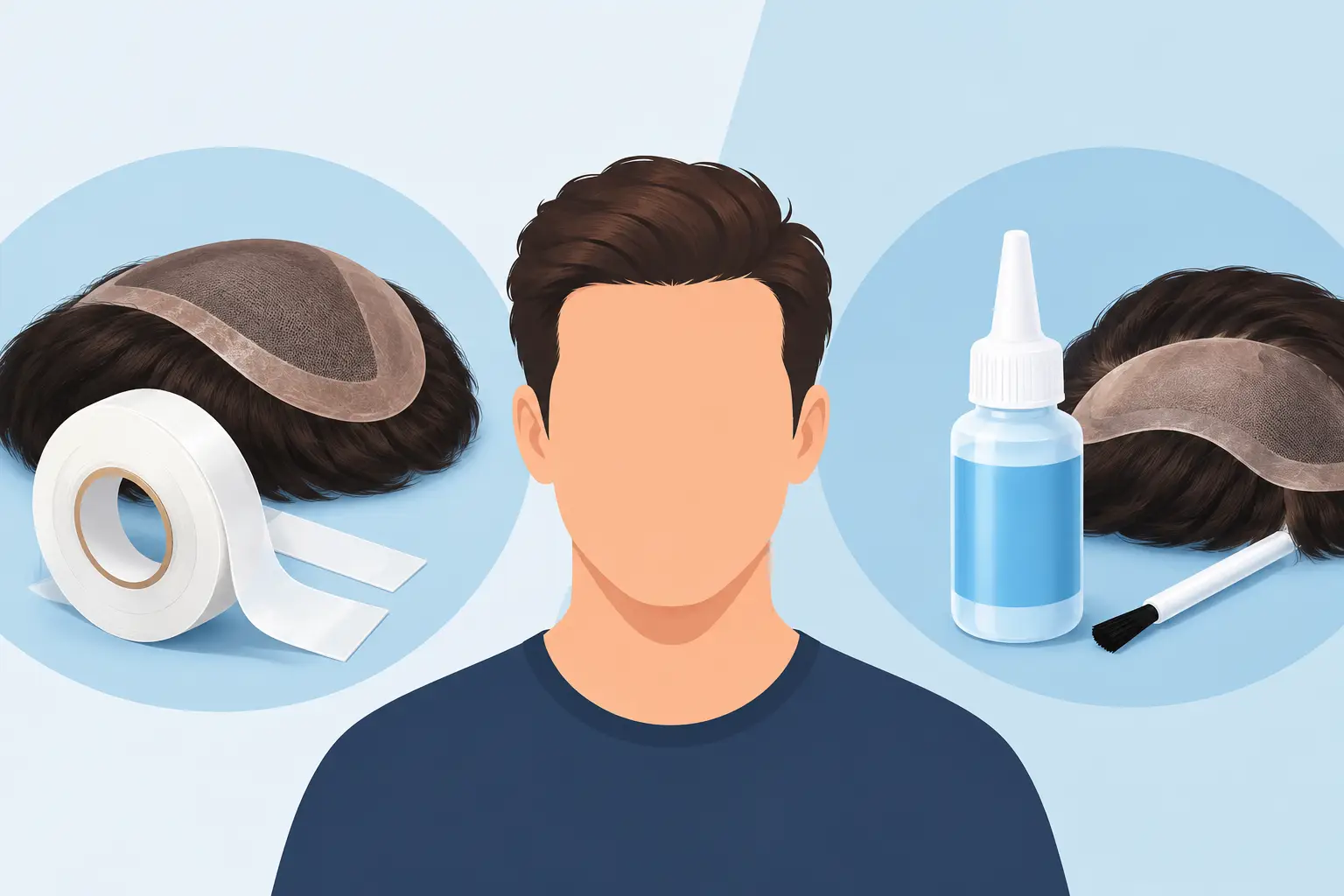
Toupee tape is a pre-cut or roll-based adhesive strip. You apply it around the perimeter of the hair system, remove the backing, and press the system into position. It creates a controlled bond with less mess and a more predictable application process.
Liquid adhesive is brushed, rolled, or sprayed directly onto the scalp, the base of the system, or both depending on the product and technique. Once it dries to the proper tack, it creates a bond that can be especially useful along detailed hairlines or across a larger attachment area.
The decision is not simply tape for beginners and liquid adhesive for experienced wearers. Some experienced clients prefer tape because it makes regular maintenance faster. Some first-time wearers prefer liquid adhesive because they want the most natural possible front hairline. Your goals should lead the choice.
When Toupee Tape Is the Better Choice
Toupee tape is often the practical favorite for men who want a reliable hold without turning maintenance into a project. It comes in different hold strengths, including daily-wear options and extended-wear tapes designed to last for weeks when properly applied and maintained.
The biggest advantage is control. Because the tape sits where you place it, you can create a neat perimeter before the system touches your scalp. That makes it easier to avoid adhesive spreading into the hair or onto areas where you do not want it. It is also easier to repeat a consistent installation routine once you have found the placement that looks right.
Tape is particularly well suited to a man who removes and cleans his system regularly, travels frequently, or wants a straightforward at-home routine. If you are wearing a system with a poly perimeter, tape often gives you a clean, secure attachment surface. It can also work well on many lace and hybrid bases, provided you use a tape appropriate for the material.
There are trade-offs. Tape can be visible if it is positioned too close to an exposed lace front, and a poorly placed strip may create a slightly raised edge. Very oily skin, high heat, and intense sweating can shorten wear time. A stronger tape may also leave more residue during removal, so “strongest” does not always mean “best.”
When Liquid Adhesive Is the Better Choice
Liquid adhesive gives you flexibility where precision matters most. It is often the preferred option for a natural-looking exposed front hairline because it can be applied in thin, nearly invisible layers that follow the exact shape of your hairline.
For men who style their hair back, up, or away from the face, that detail can make a real difference. A properly applied liquid bond can allow the lace front to sit flatter against the skin, reducing the chance of a visible transition between the system and scalp.
Liquid adhesive can also be a strong choice for active lifestyles. Certain formulas are designed to maintain hold through humidity, workouts, and regular showering. Still, no adhesive is immune to poor scalp preparation. Sweat, oil, and residue will compromise a bond if they are left on the skin before application.
The trade-off is that liquid adhesive requires patience. It must be applied in controlled layers and allowed to dry correctly. Applying the system too early can weaken the bond, while using too much product can create shine, buildup, or a messy cleanup. It is highly effective when used properly, but it asks more from your installation routine.
Your Hair System Base Matters
Your base design should influence your attachment method. A thin-skin or poly base generally pairs very well with tape because the smooth surface gives adhesive a consistent area to grip. Liquid adhesive can also work, especially at the hairline, but removal needs to be handled carefully to protect the base.
Lace systems offer exceptional realism and breathability, which makes them a strong option for men who value a light, natural feel. Liquid adhesive is commonly used at a lace front for an undetectable finish. Tape can be used behind the front hairline or around selected areas of the perimeter for added security.
Hybrid systems give you options. For example, you may use liquid adhesive at the front for realism and tape along the sides and back for easier cleanup. This approach is popular because it allows you to prioritize natural appearance where people look most closely while simplifying the rest of the attachment process.
Comfort, Skin Sensitivity, and Wear Time
A secure bond should not come at the expense of your scalp. If you have sensitive skin, start with a patch test before using any new tape, glue, remover, or scalp protector. Redness, itching, burning, or persistent irritation are signs to remove the product and reassess your routine.
Some men assume a longer hold is always more comfortable because it means less frequent maintenance. For others, regular removal feels better because it gives the scalp a chance to be thoroughly cleaned and inspected. Your ideal schedule may be a few days, one week, or several weeks depending on your skin, activity level, and hair system type.
Scalp preparation matters just as much as adhesive selection. Clean, dry skin gives tape and liquid adhesive their best chance to perform. Oils from moisturizer, sweat, styling products, and old adhesive residue can all reduce hold. A scalp protector may improve adhesion and provide a helpful barrier for some wearers, particularly in humid conditions or during heavy activity.
The Best Option for Exercise and Active Men
If you run, lift, play sports, swim, or spend long hours outdoors, you need more than a strong adhesive. You need a maintenance plan that accounts for sweat and heat.
Both tape and liquid adhesive can work for active men. Tape may be more convenient if you want quick, repeatable reattachments. Liquid adhesive may offer an advantage at an exposed front hairline when you want a flatter, more natural finish. A hybrid bond often gives active clients the best of both: tape around the perimeter with liquid adhesive only where detail matters most.
Give a fresh attachment adequate time to cure before a hard workout, swimming session, or sauna. Do not judge an adhesive after testing it under the toughest conditions immediately after installation. The bond needs time to settle, and the exact cure time depends on the product used.
What Cleanup Really Looks Like
Cleanup is the point many first-time wearers underestimate. Tape usually removes in strips, although stronger tapes can leave adhesive behind on the base or scalp. Liquid adhesive can require more detailed cleanup because it may soften and spread during removal.
That does not make liquid adhesive a bad choice. It simply means you should use the right remover, work slowly, and avoid pulling the system off dry. Gentle removal protects the delicate base and helps preserve the quality of the hair system over time.
If low-maintenance wear is your priority, tape is generally easier to manage. If a flawless exposed hairline is your priority, liquid adhesive may be worth the extra care. The right answer can change as you become more comfortable with your routine.
A Smart Starting Point for Most Men
For many new wearers, a moderate-hold tape around the sides and back is an excellent starting point. It provides dependable security, makes placement easier, and lets you learn how your scalp responds to wear and removal. If you want to show the front hairline, add a compatible liquid adhesive at the front after you are comfortable with the basic process.
At 101 Hair Replacement Systems, the best attachment method is treated as part of your complete fit, not as an afterthought. Your hair system base, hairline style, activity level, and maintenance preferences should work together to create a result that looks natural and feels like your own.
Choose the bond that makes you feel prepared for your real life. When your system is fitted correctly and attached with a method that suits you, confidence is no longer something you try to project. It is simply how you show up.