Sub-Total: $0.00
Styling Men’s Hairpieces for a Natural Look
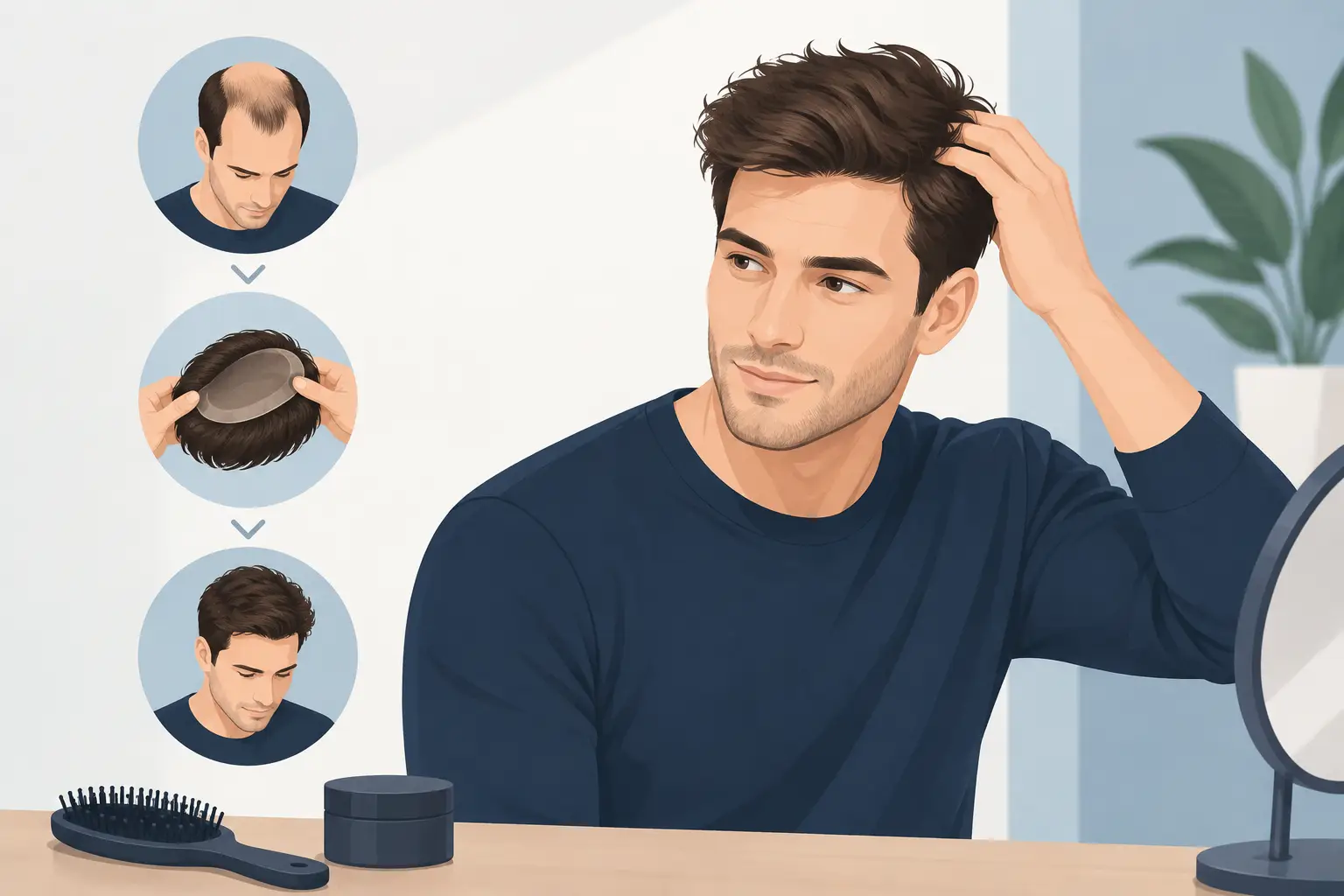
The difference between a hair system that looks good and one that looks completely believable often comes down to the final styling details. Styling men’s hairpieces is not about creating a stiff, overly perfect hairstyle. It is about getting the right movement, texture, hairline, and finish for the way you actually live.
A properly selected system gives you the foundation. The cut, product choices, and daily routine make it yours. Whether you want a conservative business style, a textured crop, a modern fade, or longer hair with natural flow, the goal is the same: a look that feels comfortable, suits your face, and lets you stop thinking about your hair.
Start With a Cut That Fits You
The strongest styling product cannot fix a cut that does not match your age, face shape, lifestyle, or remaining hair. Your hair system should be cut in after it is attached, then blended into your sides and back. This creates the transition that makes a replacement system look like your own natural growth rather than a separate piece of hair.
If you keep your natural hair short on the sides, a fade or taper can create a sharp, current look. A little more length through the sides can offer a softer blend, especially if your hair is gray or has a finer texture. Men with active routines often prefer shorter styles because they are fast to reset after the gym, swimming, or a long day outside.
Hair density matters just as much as length. A very dense system can be tempting when you have dealt with thinning hair for years, but overly dense hair can look less natural, particularly at the hairline. A realistic density that reflects your age and overall appearance usually delivers the more convincing result. The best style is not necessarily the fullest one. It is the one that looks like it belongs to you.
Styling Men’s Hairpieces Without the Stiff Look
Premium human hair systems can be styled much like natural hair, but they do not receive natural scalp oils. That means your approach should be controlled and light. Start with slightly damp hair, not soaking wet hair, and work with small amounts of product. You can always add more. Removing too much product from a system takes more effort and can leave the hair looking flat or coated.
For a natural, touchable finish, choose products based on the style you want. A lightweight leave-in conditioner or detangling spray helps preserve softness and manageability. A matte cream, molding paste, or water-based styling product can add shape without creating a hard shell. For a cleaner, more polished style, a small amount of light-hold pomade may be appropriate.
Avoid heavy waxes, alcohol-heavy products, and excessive hairspray whenever possible. These can dry the hair, create buildup, and make a system harder to clean. Oil-based products may also migrate toward the base and interfere with adhesive performance. The exact products that work best depend on your hair length, base material, attachment method, and preferred finish, so a personalized recommendation is worth getting.
When applying product, begin at the mid-lengths and ends rather than pressing it directly into the base. Use your fingers first to create separation and direction. Then use a comb or brush only where you need a more defined shape. This prevents the overly uniform look that can make hair appear unnatural.
Create Movement at the Hairline
The hairline is where confidence is won or lost. If you wear an exposed or partially exposed hairline, avoid brushing every strand straight back in the same direction. Natural hair has slight variation. A soft, imperfect finish at the front can look far more realistic than a sharply sculpted line.
For a casual textured style, lift the front slightly with your fingers and allow a few pieces to break forward or to the side. A low side part or loose brushed-back style can also work well when the system has been customized with an appropriate hairline density and front contour. If you prefer a more conservative look, a short fringe can provide excellent coverage while requiring very little daily styling.
Do not force a hairstyle that conflicts with the direction the hair was ventilated. Hair systems are made with an intended flow. Working with that natural direction makes styling easier and reduces stress on the hair. If you want to wear your hair in a significantly different direction every day, discuss that preference before choosing or customizing your system.
Use Heat Carefully and Intentionally
A blow dryer can be one of the best tools for creating volume and natural direction. Use low or medium heat, keep the dryer moving, and direct airflow from the roots toward the ends. High heat in one spot can dry out human hair and shorten the life of your system.
For volume, lift sections with a vent brush or your fingers while drying. For a flatter, cleaner finish, dry the hair in the direction you want it to sit. Heat protectant is a smart addition if you blow-dry regularly or use heated styling tools.
Flat irons and curling tools are possible with many human hair systems, but they should be occasional tools, not daily habits. Use the lowest effective temperature. Excessive heat can make hair brittle, especially on lighter colors, gray-blended systems, or longer styles where dryness is more visible.
Build a Daily Routine That Protects the System
Your morning routine should take minutes, not become another source of stress. Lightly mist the hair with water or a conditioning spray, reshape it with your fingers, and use a small amount of styling product if needed. That is often enough to bring a quality system back to life.
At night, gently comb through the hair before bed to remove tangles. A wide-tooth comb is especially helpful for longer styles. Start at the ends and work upward rather than pulling from the roots. If you use a removable system, follow your recommended removal and storage routine. If your system is bonded for extended wear, protect it by avoiding unnecessary pulling, scratching, or aggressive brushing near the attachment area.
Wash frequency depends on your activity level, scalp condition, styling products, and attachment method. Many men do not need to shampoo the hair every day. Overwashing can strip moisture and leave the hair looking dull. On the other hand, sweat, product buildup, and an active lifestyle may require more frequent cleaning. A balanced schedule with system-safe shampoo and conditioner keeps the hair fresh without overdoing it.
Common Styling Mistakes to Avoid
A natural result is often about avoiding a few easy mistakes:
- Using too much product and making the hair look hard, shiny, or weighed down.
- Applying conditioner, oils, or styling products directly at the base and attachment area.
- Blasting the same section with high heat until the hair feels dry.
- Choosing a style with more density, height, or sharpness than your natural appearance supports.
- Waiting too long between maintenance appointments, even when the system still seems wearable.
Maintenance is not only about appearance. Regular care helps preserve comfort, attachment security, and the condition of the hair. It also gives you a chance to adjust the cut or style as seasons, trends, and your preferences change.
Choose a Style That Works Beyond the Mirror
A great hairstyle should hold up at work, during travel, after a workout, and on a date night. Think about your real schedule before committing to a high-maintenance look. A sharply structured pompadour may look excellent, but it demands more time and product than a textured crop or short side-part style.
If you are new to hair replacement, start with a familiar look. The transition will feel more natural to you and less noticeable to the people around you. Once you are comfortable with your system, you can experiment with more length, texture, or a more visible hairline.
At 101 Hair Replacement Systems, personalization is central to achieving that natural result. The right base, density, color blend, hair direction, and cut work together so your system supports your confidence instead of demanding your attention.
Your hair should give you options, not rules. With a realistic system, a skilled cut-in, and a simple care routine, you can wear the style you want and move through your day knowing your hair looks like it belongs there.