Sub-Total: $0.00
Hair Restoration That Looks Like You, Not a Wig
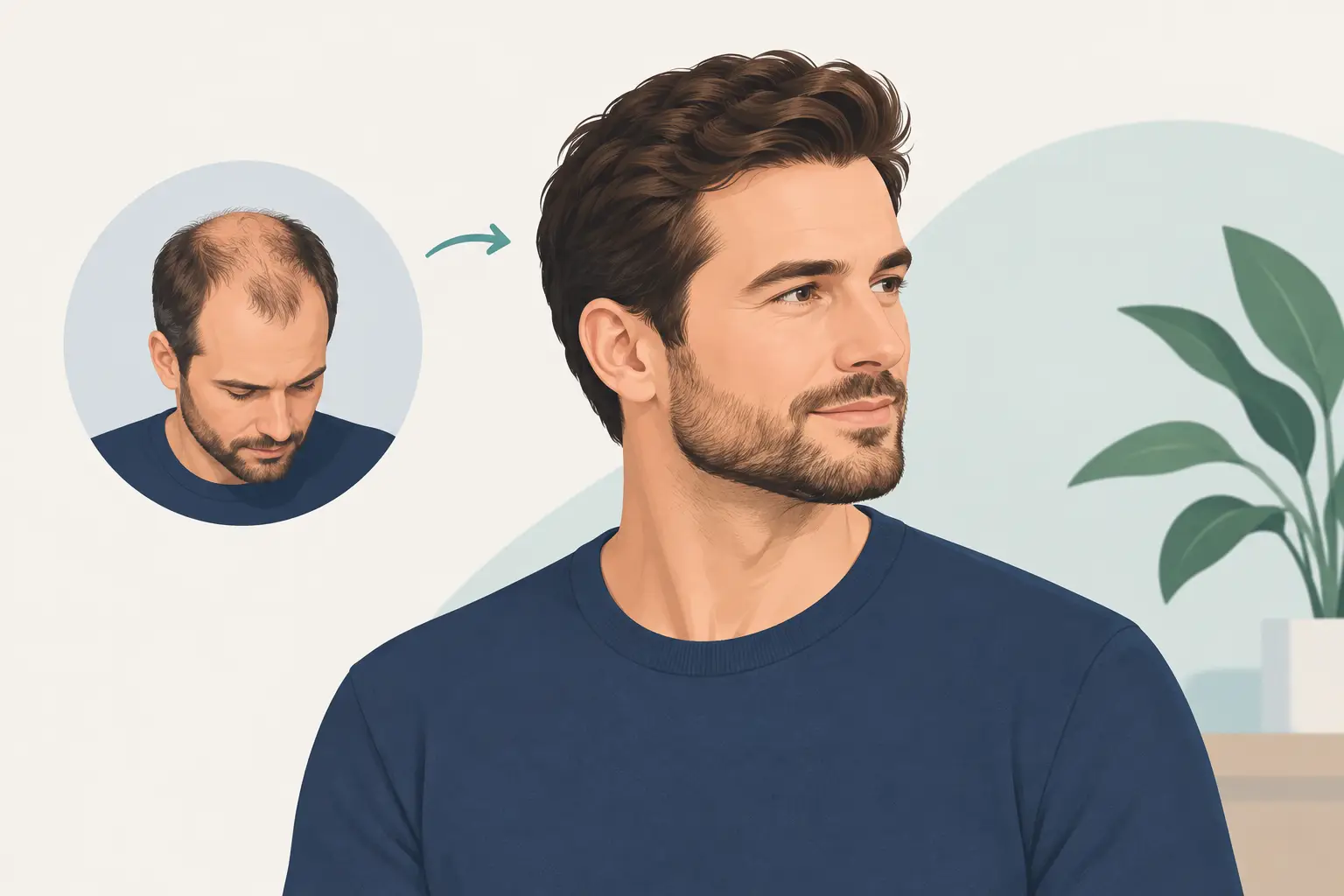
A thinning hairline can change more than your reflection. It can affect how you feel walking into a meeting, posing for a photo, or meeting someone new. The right hair restoration solution should not make you look like a different person. It should help you look like yourself again – with a fuller, natural-looking head of hair that fits your age, style, and life.
For many men, non-surgical hair replacement offers the fastest, most predictable path to that result. There is no surgery, no recovery period, and no waiting months to find out whether a procedure produced enough coverage. With a personalized hair system, the transformation can be immediate.
What Hair Restoration Means for Men Today
Hair restoration is not one single treatment. It can refer to medications, transplants, scalp micropigmentation, hair fibers, or modern non-surgical hair systems. Each approach has a place, but they do not offer the same timeline, coverage, cost, or level of certainty.
A hair transplant uses follicles from one area of the scalp to fill another. It may suit men with sufficient donor hair who are comfortable with a surgical procedure, recovery time, and gradual results. Medication can slow certain types of hair loss for some men, although it requires consistency and may not restore a dense hairline or cover advanced baldness.
A non-surgical hair system takes a different approach. It provides real, visible coverage now. A customized system is designed around your head shape, hairline, density, color, texture, and preferred style. It is then securely attached and blended with your existing hair when needed. The goal is not simply more hair. The goal is a result that looks believable from close range and feels right in everyday life.
Why Customized Hair Systems Deliver a Better Result
Generic hairpieces often create the worry that keeps men from trying hair replacement in the first place: Will it look obvious? Will it move? Will it match my real hair? Those concerns are valid when the fit, materials, and styling are treated as an afterthought.
A quality system is built around details. The base needs to sit comfortably against the scalp and create a realistic appearance at the hairline. The density must reflect your age and natural growth pattern rather than looking unnaturally thick. Color should account for the variation found in real hair, including grey when appropriate. Even the direction in which the hair is ventilated matters when you want a style that moves naturally.
Premium Remy Indian hair is valued because it offers a soft feel, natural movement, and styling flexibility. Depending on your desired result, it can be blended with synthetic fibers or human grey hair to create the right balance of realism, durability, and age-appropriate color. That is a very different experience from ordering a one-size-fits-all unit and hoping it works.
At 101 Hair Replacement Systems, personalization begins with the look you want to achieve and the life you actually live. A man who wears his hair short and pushed forward has different needs than someone who wants a textured quiff, a side part, or longer layers. Your system should support your style, not force you into one.
A Natural Hairline Is Not an Optional Detail
The hairline is where most people instinctively look. An overly straight, overly dense, or poorly attached front edge can make even expensive hair look artificial. A well-designed hairline has subtle irregularity, appropriate density, and placement that works with your facial features and age.
Some men prefer a softer, more conservative hairline that can be styled down with minimal effort. Others want the freedom to wear their hair back or off the face. Both are possible, but the right base and attachment method matter. A consultation helps determine what will look natural while matching how you want to wear your hair day to day.
Will a Hair System Stay Secure During Real Life?
Yes, when it is properly fitted and maintained. Modern attachment methods are designed for normal daily activity, including work, travel, social events, and exercise. Many men wear their systems while running, lifting weights, golfing, swimming, and going through humid summer weather.
That does not mean every system has identical wear time. Sweat level, scalp oil, workout frequency, climate, skin sensitivity, and attachment choice all affect maintenance needs. A man who trains intensely six days a week may need a different routine than someone who works in an office and exercises occasionally.
For some clients, a secure adhesive bond makes sense. For others, tape or a combination of methods provides the right mix of hold and convenience. Maintenance usually involves removing the system, cleaning the scalp and base, refreshing the attachment, and restyling as needed. Many men choose professional service for peace of mind, while others learn to handle parts of the routine themselves.
The key is setting realistic expectations. Hair replacement is low-disruption, not zero-maintenance. In return, you get control over your appearance without a surgical commitment or a long waiting period for growth.
Choosing the Right Hair Restoration Option for Your Hair Loss
The best option depends on where you are now and what result matters most to you. If your priority is stopping early thinning and you are comfortable waiting for gradual changes, medical treatments may be worth discussing with a qualified healthcare provider. If you have enough donor hair and want a permanent surgical strategy, transplantation may be a consideration.
But if you want immediate, full coverage for thinning, recession, crown loss, or complete baldness, a customized hair system can be the more direct choice. It does not depend on your remaining donor supply. It can create density where a transplant may be limited. And unlike hair fibers, it does not wash away or require daily application.
Non-surgical systems also give you flexibility. You can change your style, adjust density, shift to more grey over time, or choose a more conservative hairline as your preferences evolve. That flexibility matters because hair loss rarely stays the same forever.
Questions Worth Asking Before You Buy
Before choosing a provider or ordering a system, focus on the quality of the process, not just the price. Ask whether the system is customized to your measurements and hair characteristics. Find out what type of hair is used, how the base is selected, and what ongoing support is available after the initial fit.
You should also ask about maintenance, expected lifespan, attachment choices, and whether the provider can help you create a realistic transition between your existing hair and the system. A lower upfront price can become frustrating if the hair tangles quickly, the color does not match, or you are left without guidance once it arrives.
The right provider should make the process feel clear and private. You deserve direct answers about what will work for your hair loss pattern, lifestyle, budget, and preferred look. There is no benefit in being sold a dense, dramatic style if it does not feel like you.
Getting the Most From Your New Look
Your hair system will look its best when it is treated like quality hair, not like a disposable accessory. Use products suited to the hair and attachment method, avoid harsh pulling at the base, and follow a maintenance schedule based on your activity level. Regular cleaning helps protect both your scalp comfort and the integrity of the bond.
Styling also becomes easier once you work with the system rather than against it. A skilled cut-in can turn a well-made unit into a result that feels completely personal. The right haircut accounts for your face shape, existing side hair, hairline preference, and the amount of maintenance you want to handle each morning.
Most importantly, give yourself permission to enjoy the change. Men often spend years trying to hide thinning areas with careful combing, hats, or avoidance of harsh lighting. A natural-looking system removes that daily calculation. You can show up with confidence because your hair is no longer the first thing on your mind.
You do not have to wait until hair loss feels overwhelming to take action. A private consultation can help you see what is possible and choose a solution that looks natural, stays comfortable, and gives you back the confidence to be fully present wherever life takes you.