Sub-Total: $0.00
Best Haircuts for Hair Systems That Look Natural
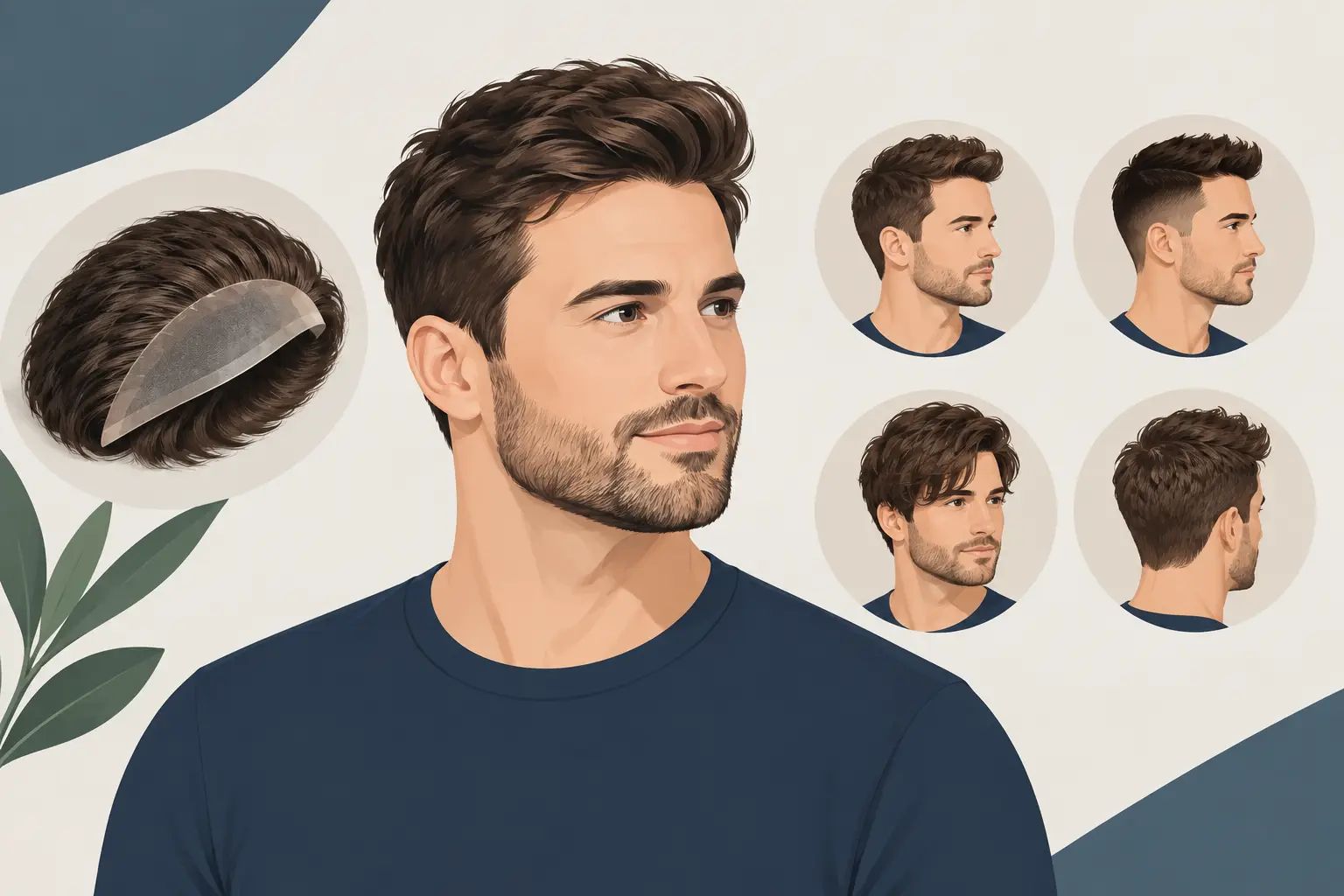
The best haircuts for hair systems do more than cover hair loss. They make the system look like it has always been part of your look. The right cut creates believable movement, softens the hairline, and gives you a style that feels appropriate at work, at the gym, and everywhere else you show up.
A great hair system can give you a full head of hair immediately. A poor haircut can make even premium hair look too dense, too stiff, or too obvious. That is why choosing your style before selecting density, base type, and hair length matters. Your goal is not simply more hair. It is a natural result that fits your age, face shape, grooming habits, and confidence.
What Makes a Hair System Haircut Look Real?
The most natural hair system cuts have texture, graduation, and a believable connection between the system hair and the hair you still have around the sides and back. A good stylist does not treat the system like a wig that needs a basic trim. They shape it to remove excess bulk, create a natural silhouette, and build in the slight irregularity that real hair has.
Density is a major factor. Very dense hair may sound appealing, especially if you have been thinning for years, but too much density can look unnatural on an adult man. A more age-appropriate density often delivers the stronger result because it looks credible up close and in photos. The same principle applies to the front hairline. A softer, slightly imperfect hairline usually looks more convincing than a sharply defined one.
Your lifestyle should influence the cut, too. If you train hard, travel frequently, or want a lower-maintenance routine, a shorter textured style may be more practical than longer hair that requires daily heat styling. If you enjoy styling your hair and want more coverage around the front, a longer layered look can be an excellent choice.
Best Haircuts for Hair Systems by Style
Textured Crop
The textured crop is one of the most reliable choices for first-time hair system wearers. It is short enough to feel clean and manageable, while the textured top keeps the result from looking flat or overly uniform. The fringe can be worn forward, slightly to the side, or broken up with a matte styling product.
This cut is especially useful when you want to minimize attention at the front hairline. Because the hair is directed forward and has visible texture, it does not demand a fully exposed hairline. Pair it with a low or mid fade for a current, masculine look that works in professional and casual settings.
Short Back and Sides With a Side Part
A classic side part remains a strong option for men who prefer a polished, professional appearance. It creates structure without looking overly styled, and it can be tailored to a wide range of ages. The top is typically kept long enough to comb over naturally, with shorter sides that blend into your existing hair.
The trade-off is that a distinct side part can expose more of the hairline and parting area. This style benefits from precise customization, especially in density and color matching. If you want a traditional business haircut with natural movement, it is worth having the system cut in by a professional who understands hair replacement.
Modern Quiff or Brush-Up
A quiff or brush-up gives you height at the front and a more energetic, youthful profile. It can be subtle, with a loose upward direction, or more pronounced if you enjoy styling. This cut works well for men who want their new hair to make a visible impact without crossing into an exaggerated look.
Because the front is lifted away from the forehead, the hairline is more visible. That makes a realistic front contour, appropriate density, and secure attachment especially important. A quiff is a good choice when you are comfortable using a blow dryer and light styling product, but it may not be the easiest option if you want to spend almost no time on your hair each morning.
Messy Layers With Medium Length
Medium-length layers are ideal for men who want softness, movement, and more styling flexibility. The hair can be worn loosely swept back, pushed to one side, or styled into a casual textured look. Layers reduce the heavy, helmet-like appearance that can happen when longer system hair is cut too bluntly.
This style can be particularly flattering if you have strong facial features or prefer a less conservative look. It does require more maintenance than a crop, including regular conditioning, gentle detangling, and styling. For the right wearer, however, the natural movement is hard to beat.
Slick Back or Swept Back
A swept-back haircut can look confident and refined, particularly when paired with tapered sides or a low fade. It gives the appearance of fuller coverage and works well for men who like a clean, intentional finish. A loose sweep is generally more natural than a tightly slicked-back style, which can reveal too much of the hairline.
This is not the best choice for every system wearer. If your priority is maximum discretion at the front, styles that fall forward often provide more forgiveness. But with the right hairline design and professional cut-in, a soft swept-back style can look exceptionally natural.
Curly or Wavy Textured Styles
Natural-looking wave or curl can be one of the best ways to add realism to a hair system. Texture breaks up density, creates visual movement, and helps blend the system with curly or wavy side hair. It also gives you a relaxed look that does not need to be perfectly styled to appear intentional.
The key is matching the curl pattern to your natural hair and selecting a manageable length. Tighter curls can make hair appear shorter than it is, while loose waves may need more styling support. A customized system with Remy human hair can be tailored to create a texture that looks believable rather than manufactured.
Match the Cut to Your Hairline and Face Shape
The haircut that looks best is not always the one you saved on your phone. A square or angular face can often carry a crop, quiff, or tight fade well. A rounder face may benefit from some height on top and cleaner sides. If your face is longer, avoid excessive vertical volume and consider a textured fringe or medium-length layers.
Your hairline preference matters just as much. A forward fringe offers coverage and easy styling. A softer, broken hairline works beautifully with textured cuts. An exposed hairline can look excellent, but it needs careful customization and maintenance. There is no single correct choice – only the cut that gives you the most natural result for how you want to live and present yourself.
Avoid These Common Hair System Haircut Mistakes
One common mistake is choosing a style with far more hair than you would realistically have at your age. Fuller is not always better. The most convincing result is often a moderate density with texture and movement.
Another is taking the sides extremely short without planning the blend. A high skin fade can look sharp, but it creates a more demanding transition between your natural hair and the system. It can still work, especially with a well-fitted system, but a low fade or taper is often easier to blend and maintain.
Finally, do not let an unfamiliar barber cut aggressively into a new system without a clear plan. Hair system hair does not grow back from the base after a mistake. Work with someone experienced in hair replacement, or choose guided support that helps you select the right length, density, and style before the first cut-in.
Get a Cut That Feels Like You
The best haircut should make people notice that you look rested, confident, and like yourself – not make them wonder what changed. Whether you want a clean crop, a classic side part, or natural textured layers, the right system and cut can give you a result that fits your life immediately.
At 101 Hair Replacement Systems, personalization starts with the details that make a style believable: your color, density, texture, hairline, and daily routine. Choose a look you will enjoy wearing, then give it the professional shaping it deserves. Confidence is easier to hold onto when your hair feels natural from every angle.