Sub-Total: $0.00
Guide to Hair System Adhesives That Hold
A great hair system can change how you show up at work, at the gym, and in every photo you did not want to avoid. But even the most natural-looking system needs the right attachment method to stay comfortable, secure, and discreet. This guide to hair system adhesives explains what men need to know before choosing tape, glue, or a combination of both.
The best adhesive is not automatically the strongest one. It is the one that matches your skin, your hair system base, your lifestyle, and how often you want to remove and maintain your system. A secure hold should give you confidence without creating unnecessary irritation, mess, or damage during removal.
Guide to Hair System Adhesives: Start With Your Wear Schedule
Your preferred wear schedule is one of the biggest factors in choosing an adhesive. Some men remove their systems every few days for cleaning and scalp care. Others prefer an extended wear bond that can last for weeks with proper maintenance. Neither approach is better across the board. The right choice depends on what feels practical and comfortable for you.
Daily or short-term wear often works well with lighter tapes or gentle adhesives. These options can make removal easier, especially for men who exercise frequently, have sensitive skin, or simply prefer to clean their scalp often. They also give you more flexibility if you are new to wearing a hair system and still learning what feels right.
Extended wear adhesives are designed for men who want more time between maintenance appointments. A stronger bond can be a good fit for travel, busy work schedules, swimming, and active routines. The trade-off is that removal takes more patience, and cleanup becomes more important. If an adhesive is left on too long or removed carelessly, it can irritate the scalp or leave residue on the base.
Hair System Tape vs. Liquid Glue
Hair system tape and liquid glue can both create a natural, reliable hold. The difference comes down to where you need the adhesive, how invisible you want the hairline to look, and how much control you want during application.
Hair system tape
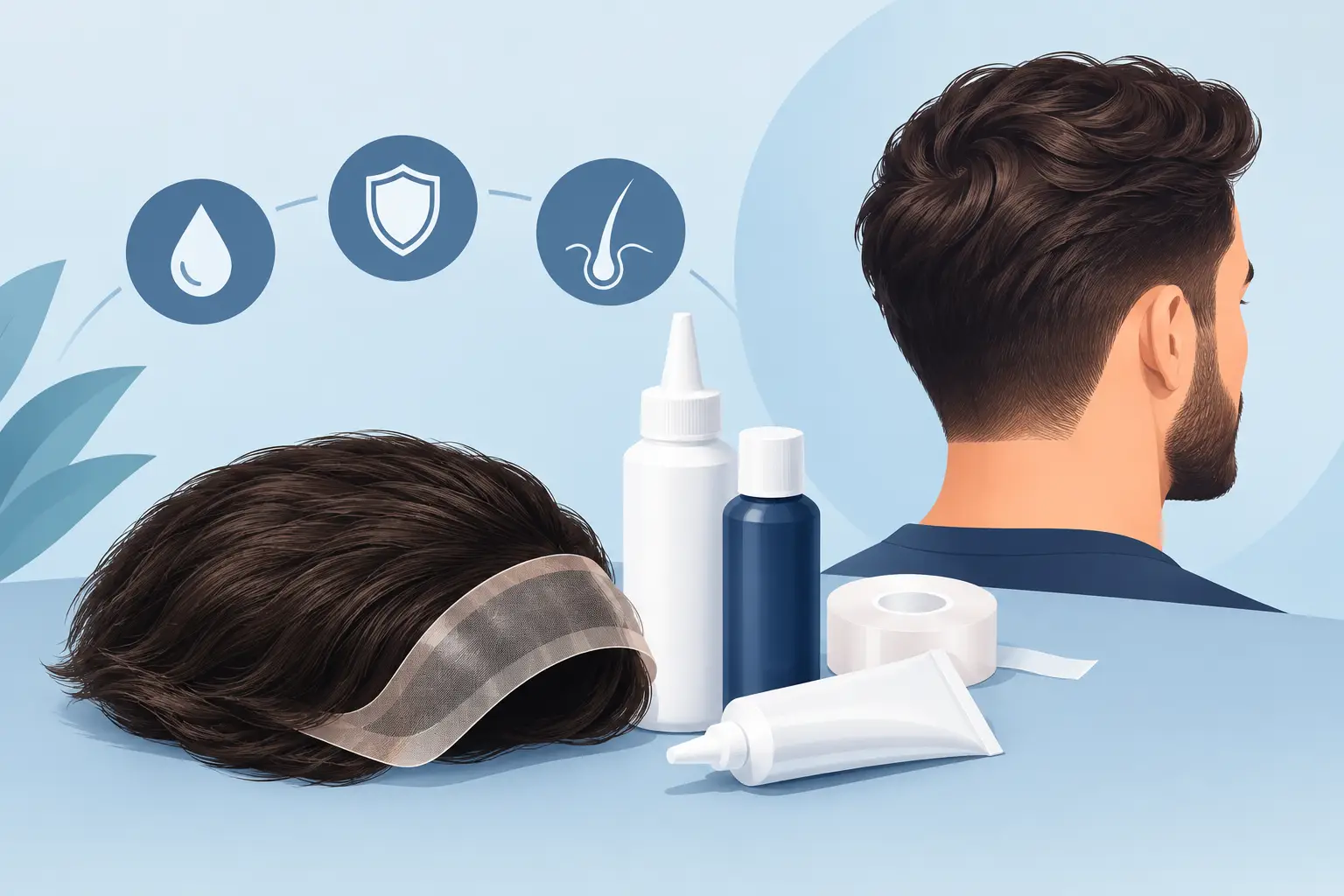
Tape is a popular choice because it is clean, fast, and easy to apply. It comes in strips, rolls, and pre-cut contours that follow the shape of the hairline or perimeter. Many men choose tape for the sides and back of their system because it provides dependable attachment without adding much time to their routine.
Tape can also be an excellent option for short-term and extended wear, depending on the product. Its main limitation is the front hairline. If you wear your hair brushed back or expose the hairline often, some tapes may be more visible than a properly applied liquid adhesive. This depends on the tape, base material, lighting, and how close someone is standing.
Liquid hair system glue
Liquid glue gives you more precision, particularly around a natural-looking front hairline. When applied in thin, even layers and allowed to dry correctly, it can create an undetectable finish that works beautifully with lace systems. Men who style their hair away from the face often prefer glue for this reason.
Glue requires more technique than tape. Applying too much can cause shine, seepage, or a messy edge. Applying it before it turns clear can weaken the bond. It may take a few applications to get comfortable with the process, but the payoff can be a cleaner, more natural result.
Using tape and glue together
For many men, the most practical answer is not tape or glue. It is both. Tape can provide secure attachment around the sides and back, while glue handles the front hairline where precision matters most. This approach can reduce application time while still delivering the realistic finish you want.
Match the Adhesive to Your Hair System Base
The base of your hair system matters just as much as your lifestyle. Lace, skin, and hybrid bases each interact with adhesives differently.
A lace base is lightweight, breathable, and known for its realistic hairline. Because lace is delicate, it benefits from careful adhesive selection and gentle removal. Liquid glue is often used at the front for a natural appearance, while tape may be used elsewhere for added security. Too much adhesive can seep through lace and make cleanup more difficult, so thin layers matter.
A poly or skin base is smooth and easier to clean because adhesive stays on the surface rather than passing through the material. Tape and glue both work well with poly bases, and many men appreciate the strong, predictable bond. The trade-off is that a thicker skin base may feel less breathable than lace, particularly in hot weather or during demanding workouts.
Hybrid systems combine materials to balance realism, durability, and comfort. For example, you may have lace at the front with poly around the perimeter. This design gives you options: glue where an exposed hairline needs to disappear and tape where you want quick, secure attachment.
Consider Sweat, Heat, and Your Skin Type
If you train hard, work outdoors, travel often, or live in a humid climate, choose an adhesive designed to stand up to moisture and heat. Sweat does not automatically mean your system will lift, but it can shorten bond time if the adhesive is not suited to your routine or if the scalp was not prepared correctly.
Men with oily skin may need a stronger adhesive or a more frequent maintenance schedule. Natural scalp oils can gradually weaken the bond, especially near the front hairline. A scalp protector can help create a better surface for attachment while adding a barrier between your skin and the adhesive.
Sensitive skin deserves a slower approach. Start with a patch test before using any new tape, glue, remover, or scalp preparation product across your entire attachment area. If your scalp becomes itchy, red, or uncomfortable, do not try to push through it for the sake of a longer hold. Switch products, shorten your wear schedule, or get personalized guidance. Comfort is part of a natural-looking result.
Scalp Preparation Makes the Difference
Even the best adhesive cannot perform well on a scalp covered with oil, sweat, or old residue. Before applying your system, clean the attachment area thoroughly and let it dry completely. Avoid applying moisturizer, heavy styling products, or oily sunscreen where the adhesive will sit.
If you use a scalp protector, apply it in a light, even layer and give it time to dry. This step is especially helpful for men with oily or sensitive skin, as well as men who want better performance during workouts. Think of preparation as the foundation of your hold. Skipping it may save a few minutes now, but it can lead to lifting and frustration later.
Apply Adhesive With a Light Hand
More adhesive does not mean more security. It usually means more cleanup.
With tape, press each piece firmly onto the system or scalp, depending on your preferred method, and avoid touching the adhesive surface with your fingers. Oils from your hands can reduce tackiness. When positioning the system, start at the front or use a mirror setup that lets you confirm your hairline placement before pressing down fully.
With liquid glue, apply very thin coats rather than one thick layer. Allow each coat to dry until it is clear and tacky before adding another layer or attaching the system. The exact number of layers depends on the product and the hold you need, but patience between coats is what creates a clean bond.
A slightly imperfect first application is normal. The goal is not to become an adhesive expert overnight. The goal is to find a repeatable routine that gives you a secure fit and lets you forget you are wearing a hair system.
Remove Your System Without Rushing
Removal is where many avoidable problems happen. Never pull a hair system off dry or force a lifted edge. Use an appropriate adhesive remover, allow it to break down the bond, and work slowly from the perimeter inward.
Take extra care around lace fronts. Pulling or scraping can damage the base, loosen hairs, and shorten the life of your system. Once removed, clean adhesive residue from both the scalp and the base before reattaching. A clean base helps the next bond perform better and keeps your system looking fresh.
Your maintenance schedule should also include washing, conditioning, and styling the hair with products appropriate for hair systems. Premium Remy human hair can look remarkably natural, but it still needs thoughtful care to stay soft, manageable, and realistic over time.
When a Customized Recommendation Helps
There is no single adhesive that works perfectly for every man. Your system design, hairline style, skin chemistry, activity level, and desired maintenance schedule all affect the right choice. A man who wants a low-maintenance, closed hairline may need something very different from a man who wears a lace front brushed back every day.
At 101 Hair Replacement Systems, personalized guidance is part of achieving a result that looks natural and feels secure. The right system and adhesive routine should support your life, not make you plan your life around your hair.
Give yourself permission to test, adjust, and refine your routine. When your attachment feels comfortable, your hairline looks believable, and your system stays put through the moments that matter, confidence becomes the part people notice.