
Sub-Total: $0.00
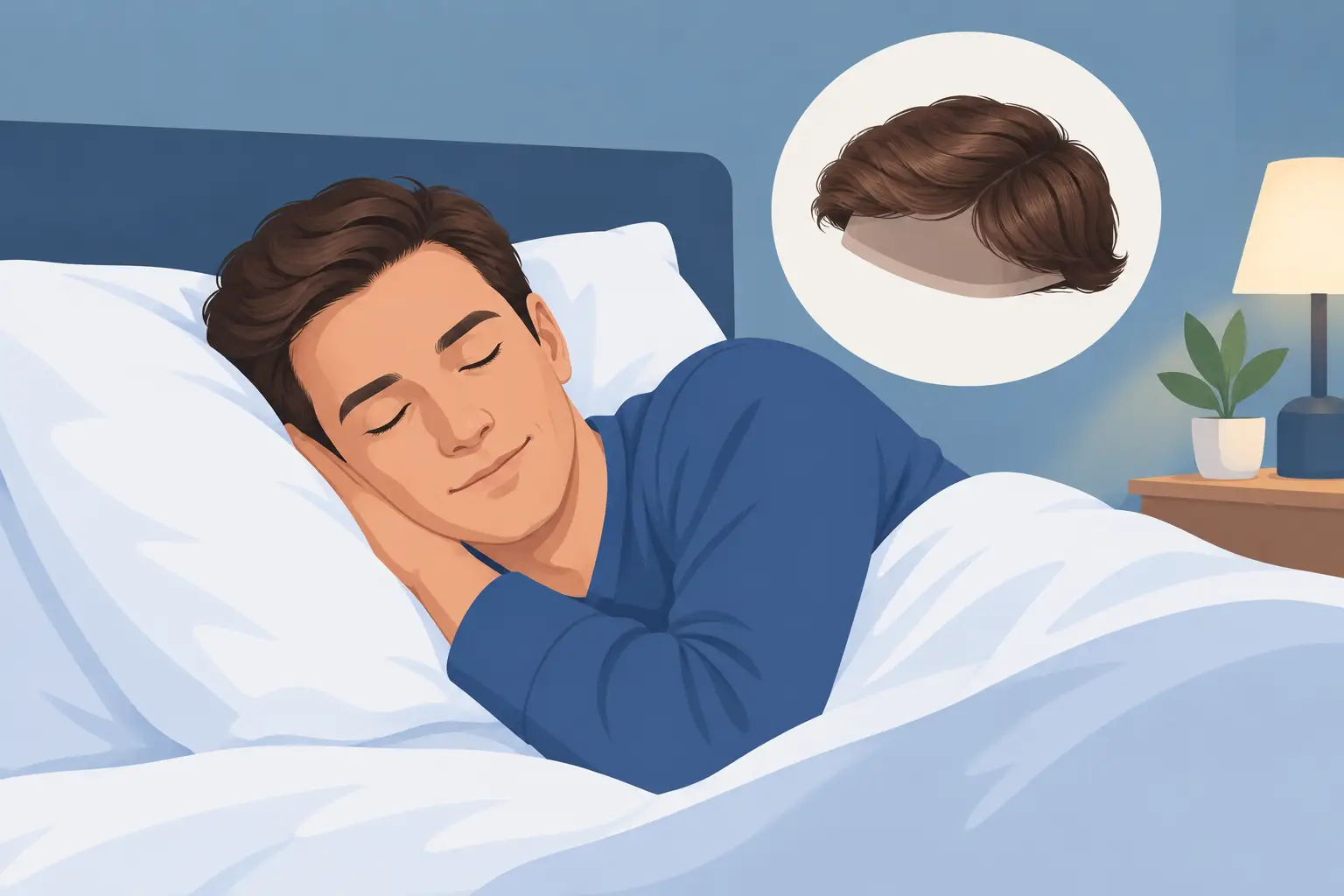
How to Sleep With a Toupee Without Worry
A great hair system should fit your life, not force you to plan your life around it. If you are wondering how to sleep with a toupee, the reassuring answer is that a properly fitted and securely attached system is made for everyday wear – including a full night of sleep. The key is matching your nighttime routine to your attachment method, activity level, and scalp needs.
Sleeping in a toupee may feel unfamiliar for the first few nights, especially if you have recently moved from hair loss to a fuller, natural-looking style. That adjustment is normal. With the right preparation, most men quickly stop thinking about their system at bedtime and wake up ready for work, the gym, travel, or a night out.
Can You Sleep With a Toupee On?
Yes. Most bonded hair systems are designed to be worn continuously, which means sleeping, showering, exercising, and going about your normal routine without removing them each day. Premium systems are lightweight, breathable, and customized to sit naturally against the scalp, so nighttime wear should not feel restrictive.
That said, not every toupee is attached the same way. A system secured with professional-grade adhesive or tape is typically intended for extended wear. A clip-on system or one worn with a temporary attachment may be better removed before bed, depending on its construction and your comfort level. Your fitting and maintenance plan should always reflect the specific system you wear.
The biggest mistake is assuming that every hairpiece needs the same routine. A personalized system gives you a more realistic look, but it also gives you a maintenance approach built around your skin, sleep habits, hairstyle, and lifestyle.
How to Sleep With a Toupee Comfortably
Your first priority is a secure bond. Do not go to bed immediately after a fresh attachment unless you have allowed the adhesive the recommended time to cure. Depending on the product and your body chemistry, that can range from several hours to a full day. A fully cured bond is less likely to shift with normal movement and helps prevent lifting around the hairline or perimeter.
Before bed, lightly check the edges with clean, dry fingertips. You are not pulling on the system or repeatedly testing it. You are simply confirming that everything feels smooth and secure. If you notice a loose edge, address it before sleeping rather than hoping it will settle overnight. Small lifts can collect oils, lint, and moisture, making the issue harder to correct in the morning.
Try to go to sleep with dry hair and a dry scalp. Sleeping with a wet or heavily sweaty system can create tangling, flatten the style, and place unnecessary stress on the base and bond. If you shower at night, give your hair enough time to air-dry or use a blow dryer on a low, controlled setting.
Your pillowcase matters more than most men realize. A smooth satin or silk pillowcase reduces friction as you move during sleep. Less friction helps preserve the direction of the hair, minimizes tangles, and can reduce unnecessary wear on the hair system. Cotton is not automatically a problem, but its more textured surface can create more drag, particularly for men who toss and turn.
If you are a side or stomach sleeper, you do not need to retrain yourself overnight. A quality hair system should support real life, not demand that you sleep in one uncomfortable position. Still, reducing friction with a smoother pillowcase becomes especially valuable if one side of your system gets more pressure each night.
Protect Your Hair System Overnight
Your hair system needs gentle care, not a complicated bedtime ritual. Avoid applying heavy oils, waxes, or sticky styling products immediately before bed. These products can transfer to your pillowcase, make the hair look greasy by morning, and potentially affect the perimeter bond over time.
If your hair is longer, gently brush it into place before sleep using a soft brush or wide-tooth comb. Start at the ends and work upward rather than pulling from the roots. This simple habit prevents knots from becoming a bigger styling problem the next morning.
Some men choose to wear a loose satin sleep cap for added protection. It can be helpful for longer styles or hair that tangles easily, but it is not required for everyone. The cap should never be tight enough to create pressure, flatten the hairstyle, or rub against the hairline. If it feels restrictive, a satin pillowcase alone is usually the better choice.
Keep your bedroom reasonably cool when possible. Excessive nighttime sweating can shorten the life of an adhesive bond, especially for active men or those with naturally oily skin. You do not need to worry about an occasional warm night, but consistent sweat and moisture may mean you need a stronger attachment option or a more frequent maintenance schedule.
What to Do When You Wake Up
A little bedhead is normal, even with the best system. The advantage is that it is usually easy to fix. Lightly mist the hair with water or a hair-system-safe leave-in conditioner, then comb or brush it back into your preferred style. Use a low-heat blow dryer if you want extra volume or direction.
Do not yank at the hair if it looks flattened or slightly tangled. Treat the system as you would high-quality natural hair: use patience, light pressure, and products that do not leave heavy buildup. Aggressive brushing is one of the fastest ways to create avoidable shedding and shorten the useful life of the system.
Take a quick look at the hairline and perimeter while you style. This is not about obsessively checking your appearance. It is about catching a minor maintenance issue before it affects your confidence. If an edge has started to lift, schedule a touch-up or follow the attachment guidance provided for your system.
Common Concerns About Sleeping in a Toupee
Many first-time wearers worry that the system will come off in the middle of the night. With correct preparation, a high-quality attachment, and a system fitted to your scalp, that is highly unlikely. Secure wear comes from the right combination of base material, adhesive, placement, and maintenance – not from sleeping perfectly still.
Another concern is damage from normal movement. Friction does create wear over time, which is why a smooth pillowcase and gentle detangling make a real difference. But you should expect to sleep normally. The goal is not to protect your hair system by avoiding life. The goal is to maintain it wisely so it keeps looking natural through life.
Itching can also be an issue for some men during the adjustment period. It may be caused by sweat, product buildup, sensitive skin, or a bond that needs attention. Do not scratch aggressively through the base. If itching persists, it is worth reviewing your scalp-care routine and attachment products with a hair replacement specialist.
Build a Routine That Fits Your Life
The best answer to how to sleep with a toupee is not one rule for every man. A frequent traveler may prioritize a durable extended-wear bond. A man who trains hard six days a week may need more sweat-conscious maintenance. Someone with sensitive skin may prefer an attachment method that allows more regular removal and scalp care.
At 101 Hair Replacement Systems, the focus is on helping men find a customized solution that looks natural, feels secure, and supports the life they already lead. The right system should give you confidence at the office, during a workout, and when your head hits the pillow.
Give yourself a few nights to adjust, keep your routine simple, and pay attention to what your scalp and system are telling you. Soon, sleeping in your toupee will feel like the least remarkable part of having your hair back.