
Sub-Total: $0.00
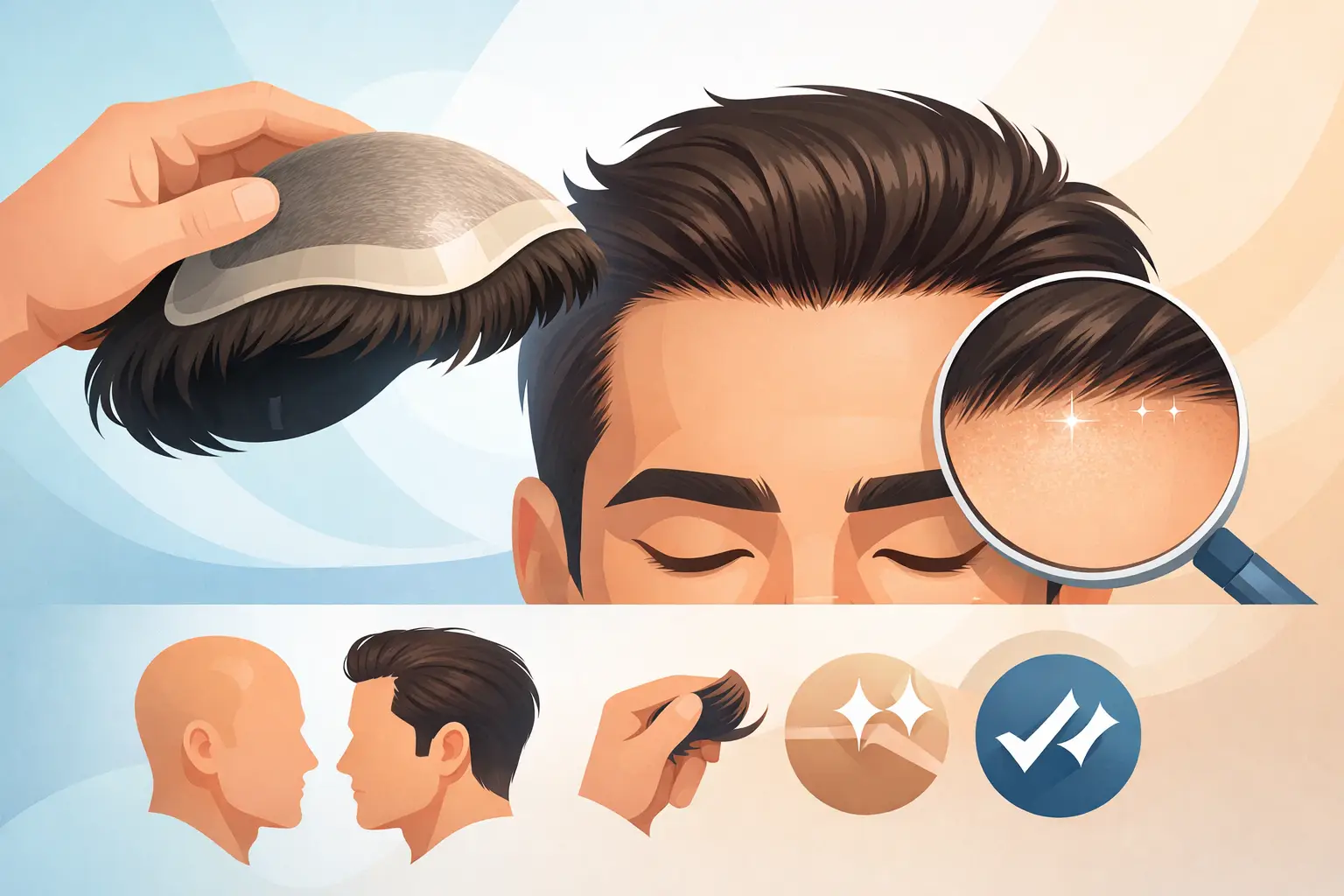
Hair System Hairline: What Makes It Look Real
The moment that matters most is the one most men worry about: standing under bright office lighting, leaning across a table, or catching their reflection after a workout. A natural-looking hair system hairline is what lets you stop thinking about whether someone can tell and start focusing on how you feel.
The goal is not a perfectly straight, overly dense front that looks manufactured. It is a hairline that fits your age, facial structure, hair color, and lifestyle so naturally that it simply looks like your hair.
What Makes a Hair System Hairline Look Real
A realistic hairline is built from several details working together. The front contour, base material, hair density, color blend, and attachment method all affect the final result. Get one of these wrong, and even premium hair can look less convincing. Get them right, and the system can blend into your appearance with remarkable realism.
The biggest mistake is chasing the hairline you had at 18. For most adult men, a slightly mature hairline looks more believable and more flattering than a low, straight line. A skilled customization process considers natural recession at the temples, the shape of your forehead, and how your existing side and back hair grows. The result should frame your face rather than announce itself.
Density matters just as much. Hair at the front naturally appears lighter and less packed than hair behind it. A system with excessive density at the hairline can create a thick, helmet-like effect, particularly under direct light. A softer, graduated density creates the subtle transition that people expect to see in natural growing hair.
Color is another detail men often underestimate. Matching one solid shade is rarely enough. Natural hair commonly contains warmer and cooler tones, minor variations, and grey strands that become more visible with age. Premium Remy Indian hair, combined where appropriate with human grey hair or synthetic fibers, can create a color profile that looks authentic rather than flat.
Choosing the Right Hair System Hairline Design
There is no single best hairline design. The right option depends on how you want to wear your hair and how much of the front you plan to expose.
If you prefer a brushed-back style, side part, or loose quiff, your front hairline will be visible more often. That usually calls for a highly natural, fine front edge and careful density graduation. Lace fronts are popular for this reason because they can create the appearance of individual hairs emerging from the scalp when fitted and attached correctly.
If you wear a forward fringe or textured crop, the hairline is less exposed. You may have more flexibility in base selection and density because the style itself provides coverage. That does not mean the hairline should be ignored. Wind, swimming, a change in styling, or a casual moment pushing hair back can still reveal the front edge.
Your age and personal style should guide the contour as well. A lower hairline can suit some men, while others look more natural with subtle recession through the temple areas. The goal is not to make you look like someone else. It is to restore a version of your appearance that feels believable, confident, and right for you.
Base Material and Attachment Make a Visible Difference
The hairline does not exist separately from the base. The material beneath the hair determines how naturally the front can sit against your skin.
Lace bases are known for their delicate, realistic appearance at an exposed hairline. They are lightweight and breathable, which can be especially appealing for men who exercise regularly or live in warm climates. They also require thoughtful handling and maintenance because finer materials can be less forgiving than thicker options.
Thin skin bases can deliver a clean look and are often easier to attach and clean. Depending on the construction and the hairstyle, they can be an excellent choice for men who value a simpler maintenance routine. Some men choose a blended base that combines materials, balancing a natural front with durability in areas that experience more friction.
Attachment is equally visible. A front edge that is lifted, uneven, or poorly cleaned will draw attention no matter how good the hair itself looks. The correct adhesive, tape, or combination of both depends on your skin, activity level, base type, and preferred wear schedule. Men with active routines need an attachment approach designed to stay secure through sweat, travel, and daily movement without becoming uncomfortable.
A secure hold should never mean ignoring your scalp. Proper cleaning, safe removal, and regular reattachment protect both your comfort and the appearance of the system. Rushing these steps can lead to residue buildup, a less precise front edge, and a hairline that no longer lays flat.
Why Customization Beats a Generic Front Edge
Stock systems can be a useful starting point, but a generic hairline rarely creates the most natural result on its own. Your forehead is not a standard size or shape. Your skin tone, existing hair texture, level of grey, and preferred hairstyle are personal details that deserve a personal fit.
Customization may involve trimming the front contour, adjusting density, selecting the right color blend, and cutting the system into a style that connects naturally with your remaining hair. It can also mean choosing a hairline placement that accounts for facial proportions instead of simply positioning the system as low as possible.
At 101 Hair Replacement Systems, the focus is on helping men choose a system that suits real life, not just a product photo. That includes selecting premium materials and building a natural-looking result around your goals, whether you want a conservative professional style or the freedom to wear your hair up and back.
Daily Habits That Protect Your Hairline
A great installation lasts longer when you treat the front edge with care. Avoid pulling hard when styling, especially while the hair is wet. Use products that are appropriate for hair systems, and apply them with a light touch near the hairline so residue does not compromise the attachment.
After intense exercise or swimming, give the area time to dry before checking the front edge. Do not repeatedly press, pick, or test the bond throughout the day. That habit can loosen the attachment faster than normal movement ever would.
Pay attention to small changes. If the front begins to lift, feels itchy, develops visible residue, or no longer sits naturally against the scalp, schedule maintenance rather than trying to hide the issue with extra product. A quick, proper refresh is usually easier than correcting a neglected attachment.
The Best Hairline Is One You Forget About
The best result is not a hairline that gets noticed. It is one that lets you walk into a meeting, take photos, date, travel, train, and look in the mirror without managing your hair loss in the back of your mind.
A natural hair system hairline comes from smart choices, not guesswork: an age-appropriate design, premium hair, the right base, precise attachment, and support that continues after the first fitting. Start with a personalized conversation about the look you want to wear, then give yourself the chance to see what confidence looks like when your hair finally feels like your own again.