Sub-Total: $0.00
How to Style a Hair System for a Natural Look
The difference between a hair system that looks good and one that looks completely natural often comes down to styling. The right cut, product, and daily routine can make your system look like it has always been your hair – whether you are heading into a client meeting, working out, or meeting friends for dinner. Knowing how to style a hair system starts with treating it differently than hair growing from your scalp.
A premium system gives you the foundation for a convincing result. Your styling choices create the finish: realistic movement, the right amount of texture, and a hairline that suits your age, face shape, and lifestyle.
Start With the Right Cut and Direction
Before reaching for any product, make sure your hair system is cut and styled around your natural features. A great system can still look out of place if the cut is too heavy, too sharp, or disconnected from the hair at the sides and back of your head.
For most men, natural-looking styles have some variation. That could mean a low taper, a subtle fade, light texture through the top, or a relaxed side part rather than a perfectly rigid line. The goal is not to create a hairstyle that demands attention. It is to create a look that fits you.
Your stylist should establish the hair’s direction while it is damp. If you want a textured crop, the hair should be cut to fall forward and slightly up. For a side-parted style, the part and sweep should be built into the haircut. Trying to force hair in the opposite direction every morning creates unnecessary pulling and makes styling harder than it needs to be.
If you are new to hair replacement, start with a style that feels close to your previous look or the look you have always wanted but could not achieve as your hair thinned. Extreme changes can be exciting, but a gradual, believable transformation is often more comfortable socially and easier to maintain.
How to Style a Hair System Without Damaging It
Hair systems made with premium human hair offer natural movement and flexibility, but they do not receive oil and moisture from the scalp the way biological hair does. That means your routine should prioritize gentle handling and lightweight moisture.
Start by lightly misting the hair with water or a leave-in conditioning spray. You want it damp, not soaked. Working on slightly damp hair makes it easier to shape without repeatedly brushing or using excessive heat.
Use a wide-tooth comb, vent brush, or your fingers to detangle from the ends upward. Pulling through knots from the root can strain the hair and put pressure on the attachment area. Take your time, especially after sleeping, swimming, or wearing a hat.
Apply styling product in small amounts. Rub it between your palms first, then work it through the mid-lengths and ends instead of packing product directly at the base. This helps preserve natural movement and prevents buildup near the hairline or attachment.
For many everyday styles, a light styling cream, water-based pomade, soft-hold paste, or curl cream is enough. The best choice depends on the finish you want:
- A matte clay or paste creates texture and a fuller, more casual look.
- A lightweight cream gives soft control for side parts and brushed-back styles.
- A water-based pomade adds definition and shine without the heavy feel of traditional grease-based products.
- A mousse can help add lift and control to longer styles when used sparingly.
Avoid products with high alcohol content, stiff gels, or heavy waxes that are difficult to wash out. They can dry the hair, leave it looking artificial, and require aggressive cleaning. More product does not create a better style. It usually creates a flatter, dirtier-looking result.
Use Heat Carefully for Volume and Shape
A blow dryer can be one of the most useful tools in your routine, particularly if you want volume at the front or a cleaner shape through the top. It can also cause dryness when used carelessly.
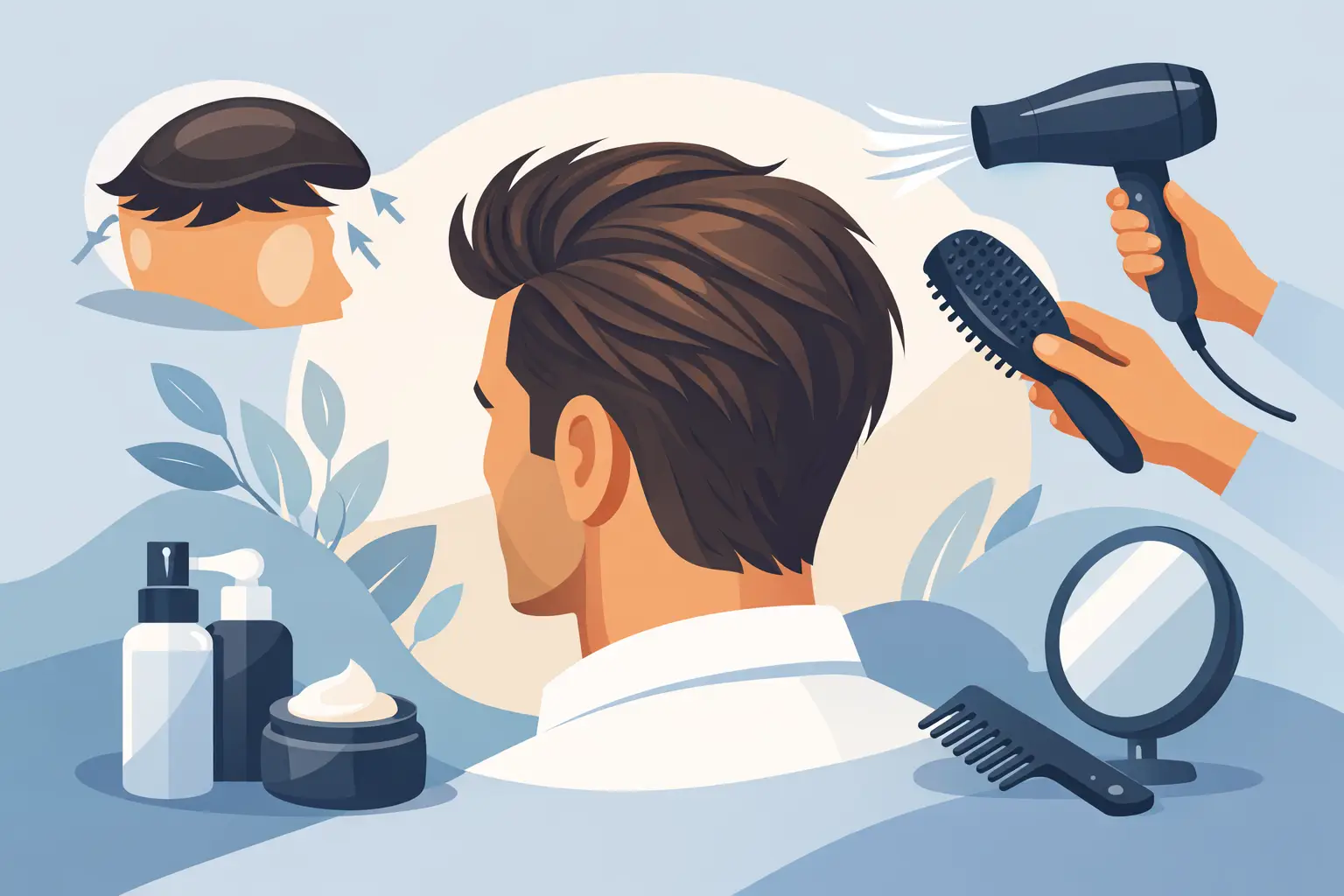
Set your dryer to low or medium heat and keep it moving. Hold it several inches away rather than concentrating heat in one area. Use your fingers or a brush to guide the hair into place as it dries. For lift, dry the hair in the direction opposite to where you want it to fall, then guide it back into position at the end.
If you use a flat iron or curling tool, keep the temperature low and apply a heat protectant designed for human hair. These tools are best reserved for occasional refinement, not daily use. A natural style usually benefits more from controlled airflow, a good cut, and the right product than from intense heat.
Men with an active lifestyle should also think about when they style. If you exercise in the morning, do not spend time blow-drying and applying product before a workout. Rinse or refresh afterward, then style once your hair has cooled and dried. It saves time and helps your look last through the day.
Make the Hairline Look Like Yours
The hairline is where natural results become obvious. An exposed hairline can look excellent, but it needs the right density, placement, and styling approach. A hairline that is too straight, too dense, or pushed too far forward can look less believable than one with a little softness.
For a textured forward style, use your fingertips to break up the fringe rather than combing it into a solid wall of hair. For a brushed-back style, leave a few subtle imperfections at the front. Real hairlines are rarely perfectly uniform.
If your system includes grey or blended fibers, let that natural variation show. Trying to make every strand look identical can work against the realistic, age-appropriate appearance you want. The most convincing hair systems are not the ones that look overly styled. They are the ones that look like they belong to you.
Be mindful of product around the front edge. Heavy pomade or greasy shine can draw attention to the hairline. If you prefer a wet look, use a small amount of lightweight, water-based product and keep the hairline clean.
Match Your Style to Your Routine
The best hairstyle is not always the most dramatic one. It is the one you can recreate comfortably before work, after the gym, during travel, and on a busy weekend.
A short textured crop is low-maintenance and works well for men who want an easy morning routine. A side part offers a polished, professional appearance and can be adjusted with a little cream and a comb. A longer, swept-back style creates a strong presence but generally needs more drying, conditioning, and attention to the hairline.
Consider humidity, sweat, and your normal level of activity. If you are frequently outdoors or train hard, a flexible style with texture will usually hold up better than a perfectly sculpted, high-shine look. Secure attachment and proper maintenance matter just as much as your styling product when you want confidence through an active day.
Refresh Instead of Restyling From Scratch
You do not need to fully wash and restyle your hair system every day. In fact, overwashing can leave the hair dry and shorten the life of your style.
On most mornings, use a light mist of water or leave-in conditioner, reshape with your fingers, and add a pea-sized amount of product only where needed. This brings back control without creating layers of buildup. If your style has flattened overnight, use a cool or low-heat blow dryer at the roots for a quick reset.
Wash your system according to the guidance provided for its hair type, base, attachment method, and your activity level. Use sulfate-free shampoo and conditioner formulated to be gentle on treated or replacement hair. When conditioning, focus on the hair itself and avoid saturating the base or bond area unless your maintenance instructions say otherwise.
After washing, blot gently with a towel. Do not rub the hair aggressively. Let it air dry partway before using a dryer, and apply leave-in moisture if the hair feels dry or looks dull.
Common Styling Mistakes to Avoid
One common mistake is chasing too much volume. A small amount of lift looks natural; exaggerated height can make the system look disconnected from your sides and back. The same goes for using too much matte clay, which can make human hair look dusty and stiff.
Another is brushing hard at the attachment points. Style the hair, not the base. Use gentle, controlled motions and avoid yanking a brush through tangles.
Finally, do not ignore changes in the fit, hairline, or condition of the hair. If your system suddenly feels loose, tangles more than usual, or is becoming difficult to style, it may be time for maintenance, conditioning support, or a replacement plan. Addressing small issues early protects both your investment and your confidence.
A well-styled hair system should give you freedom, not another source of worry. With a personalized cut, light products, and a routine built around your real life, your hair can look natural from every angle. If you want help choosing a style and system designed for your goals, 101 Hair Replacement Systems can help you build a look that feels like you – only more confident.