Sub-Total: $0.00
Your Hair Replacement Maintenance Schedule
A great hair system should fit your life, not turn into a second job. The right hair replacement maintenance schedule keeps your system looking natural, feeling comfortable, and staying secure through meetings, workouts, weekends, and travel. It also helps you get the most from premium hair, protect your scalp, and avoid the small issues that can become expensive replacements.
Maintenance is not about being overly cautious. It is about knowing what needs attention each day, what can wait until the weekend, and when it is time for a professional-level refresh. Your exact routine will depend on your base material, attachment method, activity level, skin chemistry, and desired hairstyle.
Why a Consistent Routine Makes a Difference
A hair replacement system can deliver a dramatic, immediate change in your appearance. But natural results depend on more than the initial cut-in and installation. Oils, sweat, adhesive breakdown, product buildup, friction, and normal hair shedding all affect how your system performs over time.
A consistent routine helps preserve the details people notice without realizing it: a clean hairline, a secure perimeter, healthy-looking hair, and a system that moves naturally with you. It also gives you a chance to catch lifting or buildup early, before your hairline becomes visible or your system feels uncomfortable.
There is no single schedule that fits every man. A guy who runs five miles before work, swims regularly, or lives in a humid climate may need more frequent cleaning and reattachment than someone with a lower-sweat routine. Men with oilier skin may also notice adhesive wear sooner. The goal is not to follow a rigid calendar at all costs. The goal is to create a reliable rhythm that keeps you looking sharp.
Your Hair Replacement Maintenance Schedule at a Glance
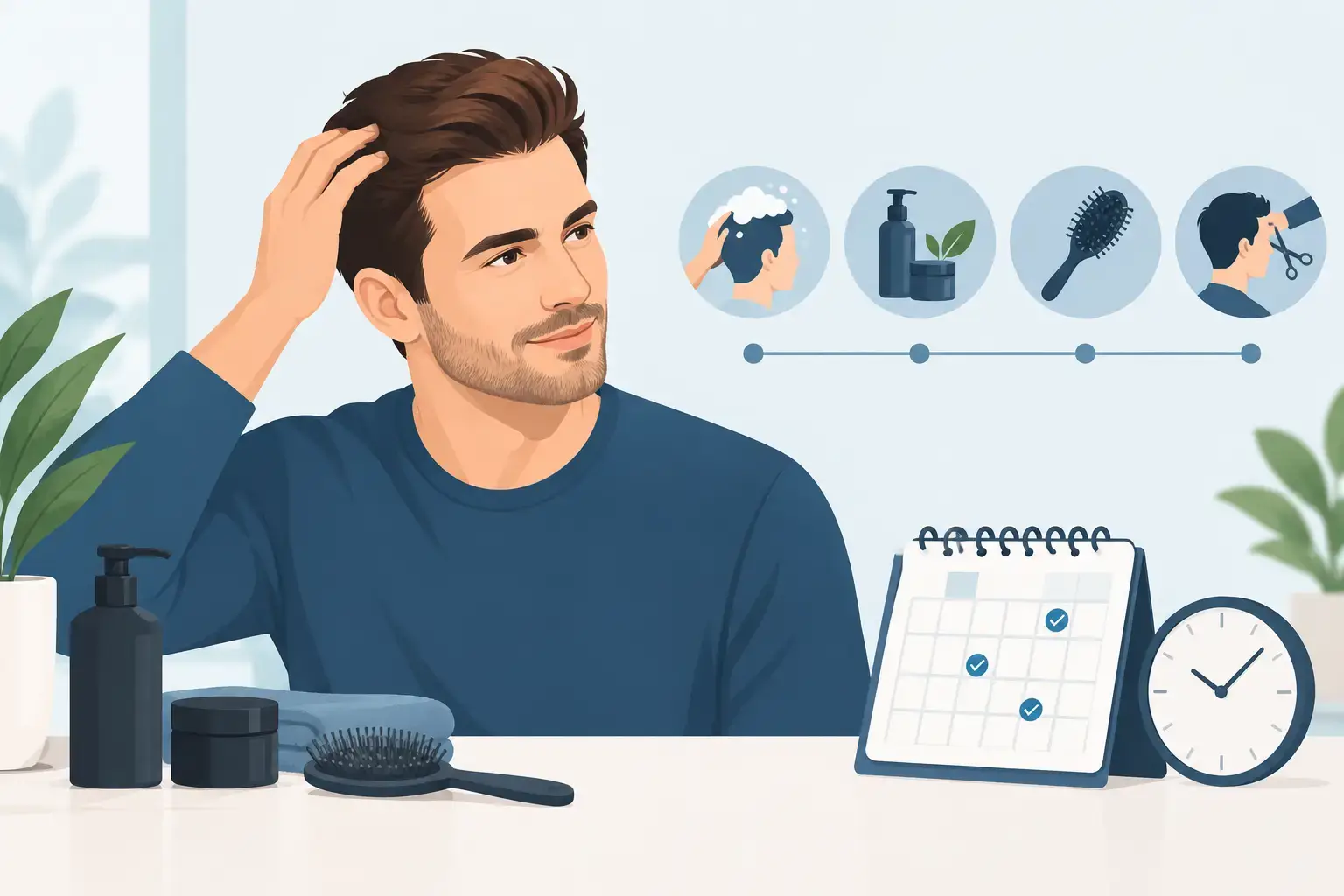
Think of maintenance in four levels: quick daily checks, weekly care, full removal and reattachment, and periodic system replacement. Once this becomes routine, it takes far less effort than most men expect.
Daily: Protect the Look You Leave the House With
Each morning, take 30 seconds to check your hairline and perimeter in good lighting. Look for lifting at the front, sides, and back, especially if you wear a style that exposes the hairline. A minor lift can often be handled with a small touch-up before it turns into a noticeable problem.
Style your system gently. Use products designed to avoid heavy residue, and do not overload the hair with waxes, gels, or oils. Too much product can make premium hair look dull, cause tangling, and interfere with the adhesive near the base. If you use a blow dryer, stick to low or medium heat and keep the airflow moving rather than concentrating heat in one spot.
After exercise, rinse away sweat when possible and pat the system dry rather than rubbing it aggressively with a towel. Sweat itself is not a problem, but leaving salt, oil, and moisture trapped against the base for days can irritate the scalp and reduce attachment strength. An active lifestyle is absolutely compatible with a hair system – it simply calls for smarter aftercare.
Two to Three Times a Week: Clean the Hair, Not the Bond
Most systems do not need a full shampoo every day. In fact, washing too often can dry the hair and shorten its usable life. For many men, shampooing two or three times a week is enough, with additional rinsing after heavy workouts or exposure to chlorine or salt water.
Use sulfate-free products and avoid scrubbing the base aggressively. Work shampoo through the hair with your fingertips, then rinse thoroughly. Follow with a lightweight conditioner through the mid-lengths and ends. Keep conditioner away from the attachment area, since it can loosen tapes or adhesives if it reaches the base.
If your hair feels dry, rough, or harder to style, that is usually a sign to adjust your product routine rather than pile on more styling product. Premium Remy Indian hair responds best to gentle cleansing, moisture, and careful handling.
Weekly: Check the Attachment and Scalp Comfort
Once a week, take a closer look at your bond. Check the edges for adhesive seepage, lifted tape, or areas that collect lint and residue. Pay attention to how your scalp feels, too. Itching, redness, odor, or unusual discomfort may mean moisture or buildup is trapped beneath the system, or that you need a different attachment approach.
A light perimeter cleanup can extend the appearance of a fresh installation, but do not keep patching a weakening bond indefinitely. If several areas are lifting or the base no longer feels clean against your scalp, a full removal is the better move.
This is also a good time to inspect the hair itself. Gently detangle it with a wide-tooth comb or a brush intended for hair systems, starting at the ends and working upward. Never pull through a knot from the roots. The hair is attached to a delicate base, and rough brushing can cause unnecessary shedding.
Full Removal and Reattachment: Usually Every 1 to 4 Weeks
Your full maintenance interval depends primarily on your attachment method and lifestyle. Many men wearing extended-wear adhesive bonds schedule full removal and reattachment every two to four weeks. Men who prefer daily wear, use tapes with a shorter hold, have very oily skin, or train heavily may choose a weekly routine instead.
During a full refresh, remove the system slowly with the proper adhesive remover. Never force it off. Clean adhesive residue from both the base and your scalp, wash the system carefully, and let everything dry completely before applying fresh tape or adhesive.
A clean scalp is the foundation of a secure, comfortable bond. This is the moment to exfoliate gently if appropriate for your skin, trim any regrowth in the attachment area, and make sure no oils or skincare products remain where the adhesive will sit. Rushing this stage is one of the most common reasons a bond fails early.
If you are new to hair replacement, professional maintenance support can remove much of the learning curve. A personalized fitting and maintenance plan helps you choose the right base, density, attachment method, and replacement timing for the way you actually live.
When to Replace the System
Even with excellent care, every hair system has a lifespan. Replacement timing varies widely based on base type, hair length, density, daily habits, and how gently the system is handled. Some lightweight, highly realistic bases prioritize an undetectable appearance and may need replacement sooner. More durable bases can last longer, though they may involve trade-offs in breathability or hairline realism.
Watch for gradual thinning, increased shedding, fading, persistent tangling, a stretched base, or a hairline that no longer sits as naturally as it once did. Do not wait until the system is clearly worn out. Ordering your next system before the current one reaches the end of its life keeps your look consistent and takes pressure off the process.
Keeping a backup system is especially valuable if you travel often, wear your hair system daily, or need to maintain a polished appearance for work. It gives you options while your primary system is being cleaned, repaired, or replaced.
Signs Your Schedule Needs an Adjustment
Your maintenance routine should make your system feel easy to wear. If it does not, the answer may be a change in timing, products, or attachment method. Consider revisiting your schedule if you notice:
- Edges lifting well before your usual maintenance day
- A scalp that feels itchy, damp, or irritated beneath the base
- Hair that looks dry or tangled despite conditioning
- Excess adhesive residue around the perimeter
- A bond that feels less secure after workouts or hot weather
These issues do not mean hair replacement is not right for you. They usually mean your routine needs to match your skin, climate, or activity level more closely. A system should support your confidence, not create a constant concern about whether it is holding.
Build a Routine You Can Actually Maintain
The best schedule is one you can follow consistently. If you want maximum convenience, an extended-wear setup with planned maintenance appointments may suit you. If you prefer to remove your system at night or like the control of frequent cleanings, daily or short-term wear may feel better. Both can look natural when the system is selected and maintained correctly.
At 101 Hair Replacement Systems, personalized guidance begins with the details that matter: your hair loss pattern, lifestyle, preferred hairstyle, skin needs, and the level of maintenance you are comfortable with. The right system and routine let you focus on your day instead of your hair.
Give your hair system the same practical care you give the rest of your appearance. A few planned minutes each week can protect the natural, secure result that helped you feel like yourself again.