Sub-Total: $0.00
Hairpiece Scalp Preparation for a Secure Fit
A great hair system can only perform as well as the surface beneath it. Proper hairpiece scalp preparation is what helps your system sit flat, blend naturally at the hairline, and stay secure through your workday, workout, travel plans, and everyday life. It is not a complicated ritual, but it does require the right order and a little attention to detail.
For men who want a natural-looking, non-surgical solution, preparation is where comfort and confidence begin. A clean, dry, properly protected scalp gives your adhesive the best possible foundation while helping reduce irritation, lifting, and the frustration of a bond that does not last.
Why Hairpiece Scalp Preparation Changes the Result
Scalp oils, sweat, dead skin, lotion residue, and remaining adhesive all interfere with bonding. Even a premium hair system with a well-matched base can shift, lift at the edges, or feel uncomfortable if it is applied over an unprepared scalp.
Preparation also affects how natural the finished look appears. When the base lies smoothly against the skin, the hairline is easier to position and less likely to develop visible ridges. That matters whether you prefer a subtle, conservative hairline or a more exposed style.
The goal is not simply maximum hold. The right preparation creates a bond that is secure enough for your lifestyle while remaining comfortable and manageable at removal time. A man who sweats heavily at the gym may need a different approach than someone with sensitive skin or a shorter wear schedule.
Start With a Healthy, Clean Scalp
A scalp that is irritated, sunburned, cut, or actively inflamed should not be covered with adhesive. Give it time to recover first. Applying a system over broken or compromised skin can cause discomfort and make adhesive removal more difficult later.
Before a new application, remove the previous system carefully and clean away every trace of tape, glue, and oily residue. Rushing this stage is one of the most common causes of poor adhesion. Adhesive bonds to clean skin, not to old adhesive residue.
Wash the attachment area with a gentle cleanser or shampoo designed to remove oil without leaving behind conditioners or moisturizing ingredients. Avoid products that promise extra hydration, shine, or smoothing before an install, since those ingredients can leave a film on the scalp. Rinse thoroughly, then dry the area completely with a clean towel.
If you have naturally oily skin, you may benefit from an additional scalp cleanser or an alcohol-based prep product that removes lingering oil. If your skin is dry or sensitive, use a lighter touch. More product is not always better, especially when your skin is prone to redness.
Shave or Trim the Attachment Area Precisely
For a full hair system, the attachment zone should be shaved close and evenly. A smooth scalp gives tape or adhesive consistent contact and prevents stubble from weakening the bond too soon. Use a clean razor or electric trimmer, and take your time around the front hairline and temple areas where precision is most visible.
Men wearing a partial topper or integration-style system may not need to shave the entire area. In that case, trim and clean the intended bonding surface as directed for your specific system. The system should be fitted around your existing hair pattern, not forced into a generic placement.
After shaving, wash again if needed to remove loose hair. Then allow the scalp to dry fully. Moisture trapped beneath a base can reduce hold and may leave the system feeling less comfortable.
The Right Hairpiece Scalp Preparation Order
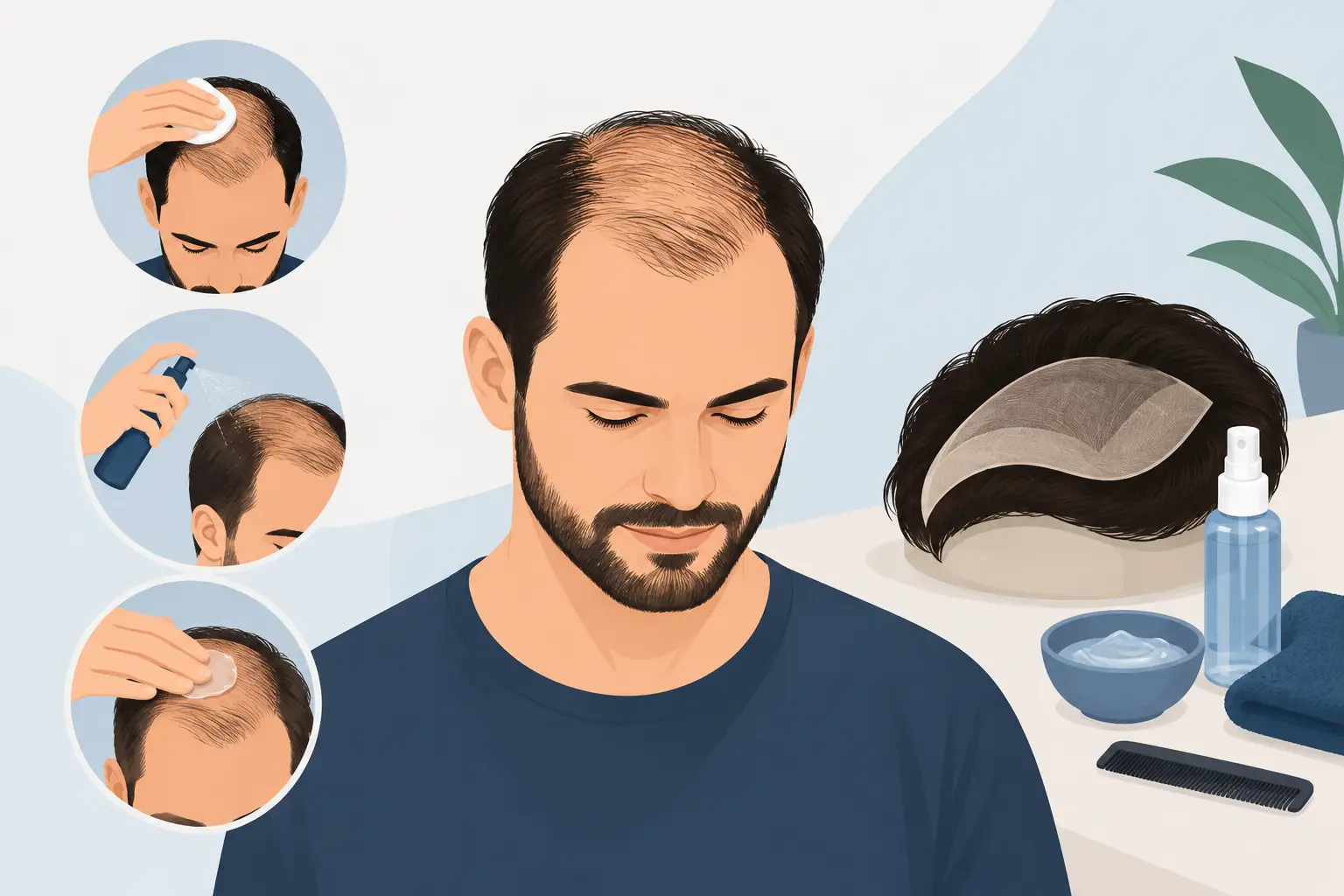
The most reliable installation follows a simple sequence: clean, dry, protect, position, and bond. Skipping steps may save a few minutes, but it often costs you days of secure wear.
First, clean the scalp and remove all residue. Next, ensure the area is completely dry. Then apply a scalp protector if it suits your skin and adhesive method. A scalp protector creates a light barrier between skin and adhesive, which can improve comfort and help protect against sweat and oil.
Let each product dry before adding the next one. This is especially important with liquid adhesive. Applying adhesive over damp skin or over a prep product that has not dried can create a weak, gummy bond rather than a secure one.
Positioning comes before commitment. Use your facial features and natural recession pattern as guides rather than placing the hairline too low. A realistic hairline usually sits where your original adult hairline would naturally fall, not where it was when you were a teenager. A customized system looks convincing because it respects proportion, age, density, and your existing side and back hair.
Once placement is correct, press the system down gradually. Start at the front or back based on your application method, then work across the base with firm, even pressure. Avoid pulling the system as you attach it. Stretching can distort the base and create tension that leads to premature lifting.
Choosing Tape, Glue, or Both
There is no single adhesive method that is right for every man. Your ideal choice depends on your skin sensitivity, activity level, preferred maintenance schedule, base material, and the look you want at the hairline.
Tape is often a strong choice for men who want a clean application and straightforward removal. It can provide excellent hold, especially around the perimeter, and works well with many system bases. Some men prefer tape because it is easier to control during at-home maintenance.
Liquid adhesive can create a very natural appearance at an exposed hairline, particularly with a thin skin or lace front system. It may take more practice to apply evenly, and removal can be more involved. For the right wearer, though, the finished result can be exceptionally discreet.
Many experienced wearers use both. Tape can secure the sides and back, while liquid adhesive gives the front hairline a more natural finish. This approach is not required, but it offers a useful balance for men who want dependable hold without compromising hairline realism.
Whatever you choose, perform a small patch test first if you are trying a new adhesive or scalp product. Sensitive skin can react differently from one formula to another, and discovering that before a full install is the smarter move.
Common Preparation Mistakes That Shorten Wear Time
The biggest mistake is applying a system immediately after a hot shower, intense workout, or steam room visit. Your scalp may look dry, but it can continue producing sweat and oil as it cools down. Give your body time to settle before installing your hair system.
Another common issue is using styling products, sunscreen, facial moisturizer, or conditioner too close to the attachment area. These products migrate more easily than most men expect. Keep the bonding surface clean and product-free.
Do not assume a stronger adhesive is always the answer to lifting. If a bond fails early, the cause may be poor cleaning, incomplete drying, heavy sweating, incorrect placement, or a base that is not matched to your needs. Increasing adhesive strength without fixing the cause can make removal unnecessarily harsh on your scalp.
Finally, avoid touching the freshly bonded system repeatedly. Check alignment once, apply pressure as directed, and allow the adhesive to cure. Constant adjustments introduce oil from your fingertips and can disturb the bond before it has set.
Prepare for Your Real Life, Not an Ideal Routine
The best hair replacement routine is one you can maintain consistently. If you train hard, swim often, travel for work, or live in a humid climate, tell your hair replacement specialist. Your system, base material, adhesive plan, and maintenance schedule should support the way you actually live.
Men with active lifestyles may need a more secure perimeter bond and a realistic plan for cleaning after heavy perspiration. Men with sensitive skin may prefer shorter wear intervals and gentler products. Neither approach is better. The right choice is the one that delivers natural results without making your routine feel like a burden.
A customized system also makes preparation easier because it is designed for your scalp coverage, hair color, density, wave pattern, and preferred hairstyle. When the fit is right, you spend less time fighting the edges and more time enjoying the confidence that comes with looking like yourself again.
Your first few applications may take longer than expected, and that is normal. Precision becomes routine with practice, and professional support can remove much of the guesswork. Give your scalp the clean foundation it deserves, choose products that match your needs, and your hair system can become one of the most reliable parts of your daily routine.