Sub-Total: $0.00
How to Wash a Remy Hairpiece Without Damage
A well-maintained hair system should look like your hair, feel comfortable through a full day, and hold its natural movement without drawing attention. Knowing how to wash a Remy hairpiece is a major part of making that happen. The goal is not to scrub it until it feels squeaky clean. The goal is to remove sweat, oil, and product buildup while protecting the hair, knots, base, and attachment.
Premium Remy hair has cuticles aligned in one direction, which helps it look smoother and more natural. It still needs a gentler approach than the hair growing from your scalp, because it does not receive your scalp’s natural oils. A rushed wash routine can leave it dry, tangled, faded, or prematurely loose. A careful one helps your system stay soft, secure, and realistic.
How Often Should You Wash a Remy Hairpiece?
For most men, washing every 7 to 14 days is a solid starting point. If you train hard, sweat heavily, swim regularly, or use styling products daily, you may need to wash more often. On the other hand, washing too frequently can strip moisture from the hair and shorten the life of the system.
Your lifestyle matters more than a rigid calendar. A man who works in an office and uses light styling cream may do well with a weekly or biweekly wash. Someone who runs, lifts, or spends long days outdoors may need a gentler rinse between full washes. If the hair begins to feel heavy, looks dull, smells less fresh, or loses its movement, it is time for a proper clean.
What You Need Before You Start
Set up your space before you begin. Having everything within reach keeps you from pulling, twisting, or rushing while the hair is wet. Use products designed for hair systems or color-treated human hair whenever possible.
- A sulfate-free, moisturizing shampoo
- A hydrating conditioner or leave-in conditioning treatment
- A wide-tooth comb or hair system brush
- Lukewarm water and a clean towel
- Adhesive remover and replacement tape or bond, if you are removing the system
Avoid clarifying shampoos unless a specialist recommends one for stubborn buildup. They can be useful in limited situations, but frequent use can leave Remy hair feeling dry and rough. Also skip very hot water. Heat can fade color, dry the hair, and make certain bases or adhesive attachments more vulnerable.
Wash It Attached or Remove It First?
It depends on your attachment method, comfort level, and maintenance schedule. A quick wash while the system is attached can be practical between full service appointments. It lets you refresh the hair and scalp without disturbing a secure bond. This is often the right choice when the attachment is still strong and you simply need to remove sweat or styling residue.
For a deeper cleaning, especially when you need to replace tape or adhesive, remove the system first. Washing it off your head gives you better access to the base and makes it easier to clean old adhesive safely. It also allows you to thoroughly cleanse your scalp before reattachment.
If you are new to hair replacement, do not feel pressured to handle every removal on your own. A professional fitting and maintenance plan can save you time, protect your investment, and help you learn the right routine for your specific base and lifestyle. Personalized guidance is especially valuable if you wear a delicate lace system or have a very active routine.
How to Wash a Remy Hairpiece While It Is Attached
Start by gently detangling dry hair. Hold the hair near the roots with one hand and comb from the ends upward with the other. This reduces tension on the knots and attachment. Never aggressively brush wet hair, since it is more fragile and can stretch or shed more easily.
Use lukewarm water and let it flow in the direction the hair was styled. Wet the hair gradually rather than blasting it with a high-pressure shower stream. When it is fully damp, apply a small amount of sulfate-free shampoo to your fingertips and distribute it through the mid-lengths and ends.
Use light downward strokes. Do not pile the hair on top of your head, rub it in circles, or scratch at the base with your nails. Those movements create tangles and can lift an edge or stress the knots. If you need to cleanse the scalp beneath the system, work carefully around the perimeter and avoid saturating the attachment area unnecessarily.
Rinse thoroughly with water flowing downward. Leftover shampoo can make the hair look flat and feel coated. Follow with conditioner from the mid-lengths to the ends, keeping it away from the base, tape, and adhesive. Let it sit briefly, then rinse until the hair feels soft but not slippery with product.
Pat the system dry with a towel. Do not rub. While the hair is still slightly damp, use a leave-in conditioner if needed and comb it into place gently. Air drying is the safest choice. If you use a blow dryer, use low heat and keep it moving so one area does not overheat.
Washing a Removed Hair System
Once the system is removed, clear adhesive from the base using the remover recommended for your attachment method. Give the remover time to work rather than scraping forcefully. Pulling at softened adhesive can damage a lace base or stretch thin skin material.
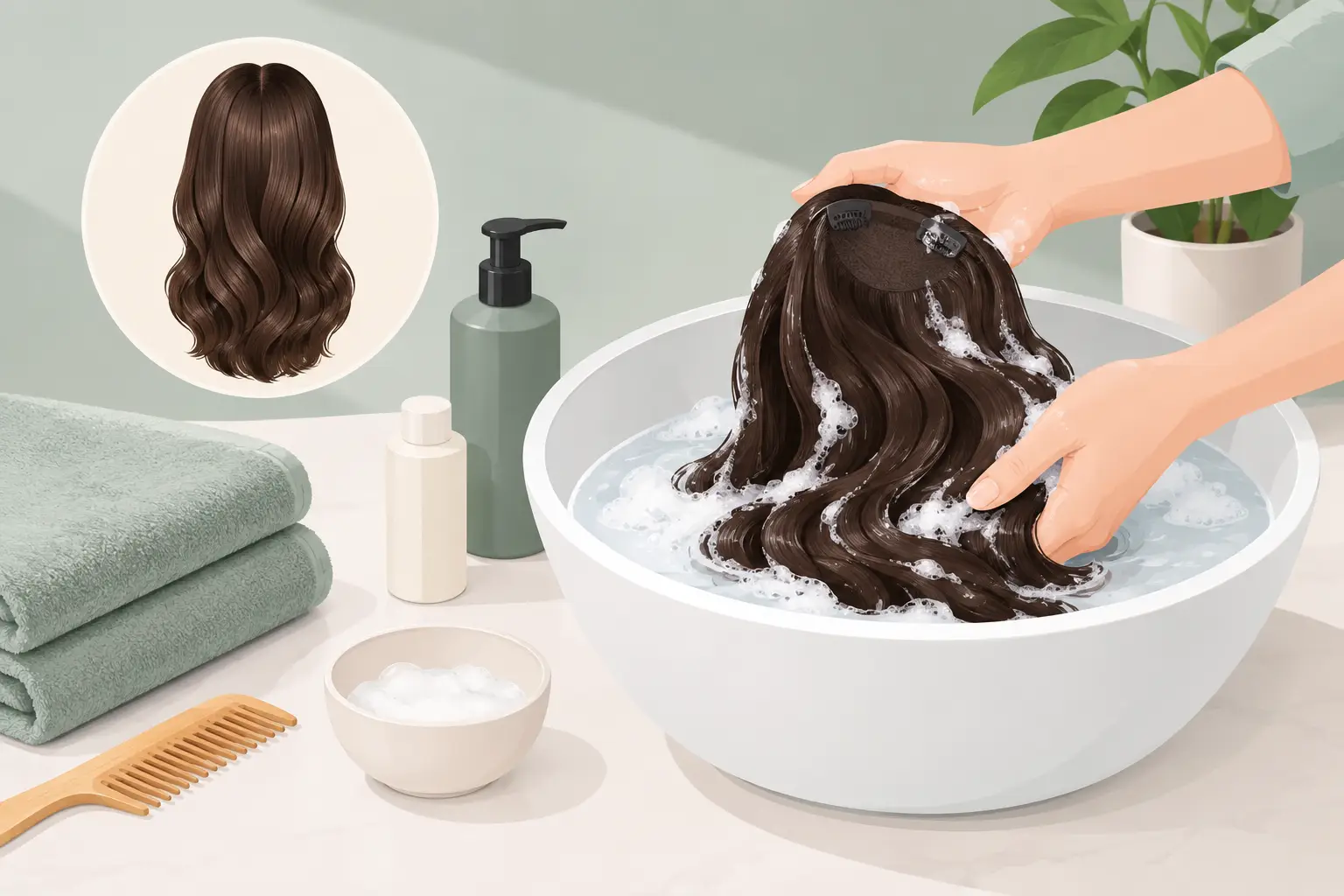
After the base is clean, hold the hairpiece under lukewarm running water with the hair flowing in its natural direction. Apply a small amount of shampoo and smooth it through the hair from roots to ends. Keep the base flat and supported in your hand or on a clean surface. Do not twist it, soak it for long periods, or scrub the hair against itself.
Rinse well, then apply conditioner mainly to the hair lengths. Conditioner can migrate into knots and base material if overused, so a little goes a long way. Rinse again and place the system on a clean towel. Press out excess water, reshape the hair with your fingers or a wide-tooth comb, and allow it to air dry completely before reattachment.
A fully dry base is essential for a secure bond. Reattaching too soon can compromise adhesion and make the system feel less stable during work, workouts, or a night out.
Common Mistakes That Shorten a Hairpiece’s Life
The biggest mistake is treating a hair system exactly like naturally growing hair. Your own scalp continuously supplies oils that help protect your hair. Remy hair on a system relies on the care you provide, so harsh shampoo, excessive heat, and daily washing take a faster toll.
Another issue is applying conditioner, oils, or heavy styling products close to the base. These products can work their way into tape, adhesive, and knots, which may cause lifting or shedding. Keep moisturizing products focused on the hair lengths, and choose lightweight styling products when you want definition or hold.
Finally, do not ignore gradual changes. Increased tangling, dryness, loosened edges, unusual shedding, or a shift in color are signals to adjust your routine. Sometimes the answer is more moisture. Sometimes it is a new attachment schedule or professional maintenance. Addressing small changes early helps preserve a natural-looking result.
Keep Your System Looking Like It Belongs to You
The right wash routine protects more than the hairpiece itself. It protects the confidence that comes from knowing your hair looks natural in close conversation, under bright lights, at the gym, and in every photo. With premium Remy hair, a gentle routine, and the right maintenance support, your system can keep delivering the realistic, secure appearance you chose it for.
If you are unsure which products, wash frequency, or attachment method fits your system, 101 Hair Replacement Systems can help you build a care plan around your hair type, base, and daily routine. A few smart adjustments can make your hair system easier to wear and better looking every day.