Sub-Total: $0.00
Hair System Allergies: Causes, Signs, and Solutions
A hair system should help you walk into work, the gym, or a date feeling like yourself again – not leave you distracted by itching, burning, or redness. Hair system allergies are a real concern for a small number of wearers, but they are often confused with irritation caused by sweat, adhesive buildup, friction, or an overdue maintenance routine. The good news is that discomfort usually has a clear cause, and the right adjustments can make secure, natural-looking wear feel comfortable again.
What Hair System Allergies Actually Mean
A true allergy is an immune reaction to a substance that touches the skin. With hair systems, that substance may be an adhesive, tape, scalp protector, remover, cleanser, dye, or even a component in the base material. Symptoms can appear quickly after application, but they may also develop after repeated exposure over time.
Irritation is different. It does not necessarily mean you are allergic to a product. It can happen when sweat, oil, old adhesive, bacteria, or harsh cleaning products remain trapped against the scalp. A system that is too tight, applied over broken skin, or worn longer than your scalp can tolerate may also create irritation.
That distinction matters. Switching products can help an allergy, but a better cleaning schedule or a different attachment method may be the answer when the problem is irritation. Guessing can turn a manageable issue into a frustrating cycle of removing and reinstalling your system.
Signs Your Scalp May Be Reacting
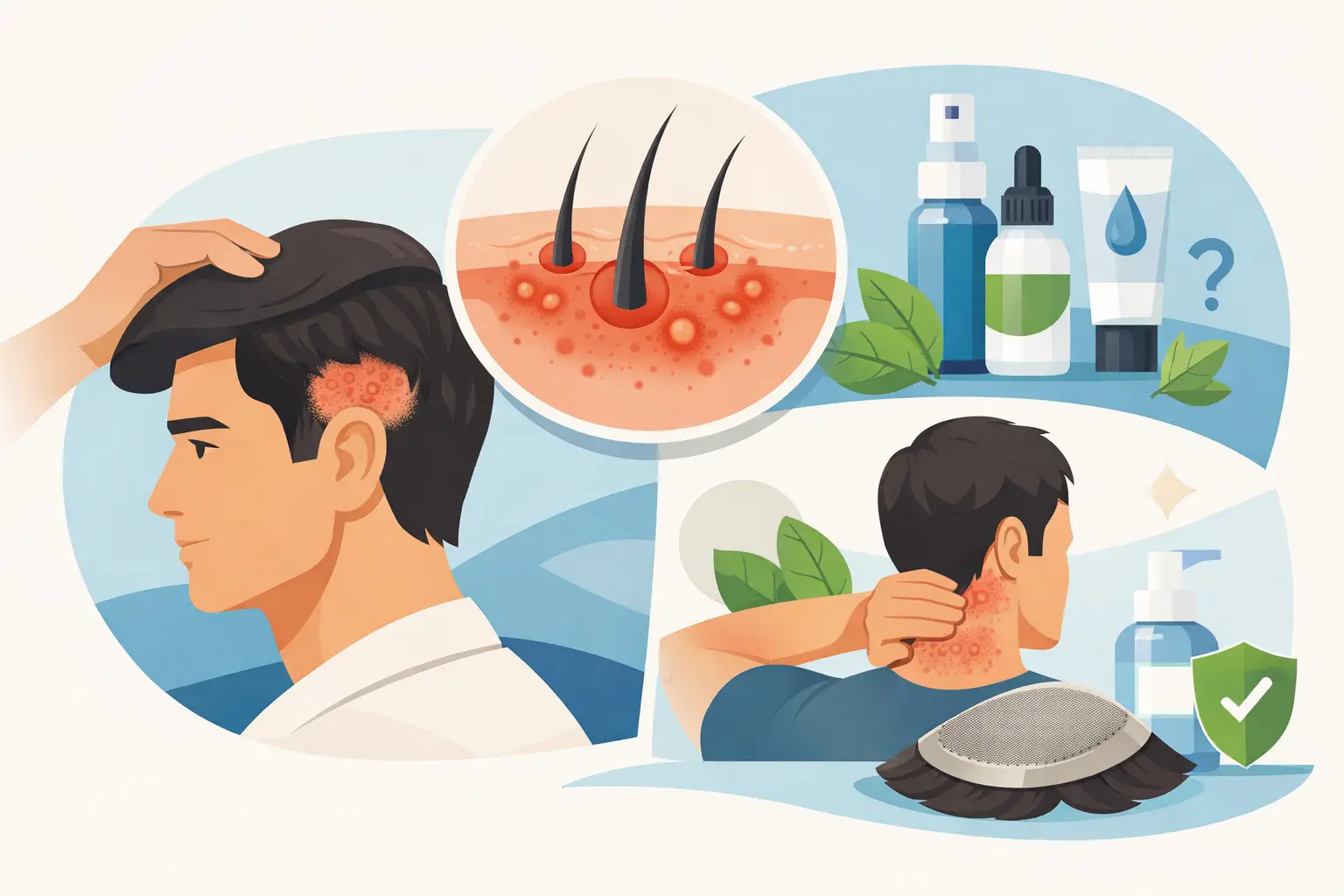
A little awareness goes a long way. Your scalp should not feel painful, intensely itchy, or inflamed after installation. Watch for persistent redness along the attachment area, stinging or burning, swelling, dry patches, small bumps, rash-like areas, flaking that is new for you, or weeping skin.
Timing offers a useful clue. If discomfort starts soon after using a new tape, glue, remover, or scalp preparation product, that product deserves attention. If symptoms become worse after workouts, hot weather, swimming, or stretching maintenance appointments too far apart, moisture and buildup may be playing a larger role.
Do not try to tough it out when symptoms are significant. Remove the system carefully if you experience burning, swelling, blistering, severe itching, or a spreading rash. If symptoms are severe, involve the eyes or face, affect breathing, or do not improve after removing the suspected product, seek prompt medical care. A dermatologist can help determine whether you are dealing with allergic contact dermatitis, another skin condition, or something unrelated to the hair system.
The Most Common Triggers
For many men, the base itself is not the issue. The attachment and maintenance products are more likely to be responsible. That is why a customized approach matters more than simply choosing the strongest adhesive available.
Adhesive and tape ingredients
Liquid adhesives and tapes vary widely in how they hold, how long they last, and what ingredients they contain. Some wearers react to certain resins, acrylates, latex-related compounds, or added fragrances. A strong hold is valuable for active lifestyles, but the strongest option is not automatically the best option for sensitive skin.
One man may wear a particular tape comfortably for weeks, while another develops itching after a few days. Skin chemistry, perspiration level, humidity, medications, and previous sensitivities can all affect the result.
Removers, cleaners, and scalp prep
Adhesive removers can be tough on sensitive skin, especially when used often or left on too long. Alcohol-heavy scalp prep products may also cause dryness or burning on a compromised scalp. Fragrance, essential oils, preservatives, and dyes can be triggers for some people, even when the product is marketed as gentle.
The problem is not always the product alone. Using too much remover, failing to wash residue away completely, or applying adhesive before the scalp is fully clean and dry can create avoidable discomfort.
Heat, sweat, and trapped moisture
A hair system is designed to stay in place through normal life. Still, heat and moisture under a base can change the scalp environment. Men who train hard, work outdoors, wear helmets, or live in humid climates may need a maintenance plan that accounts for more frequent sweating.
Sweat itself is not an allergy. But when it mixes with oil, adhesive residue, and limited airflow, it can contribute to itching, odor, inflammation, and folliculitis-like bumps. A breathable base, an attachment method matched to your activity level, and timely service can make a noticeable difference.
Existing scalp conditions
Dandruff, seborrheic dermatitis, psoriasis, eczema, fungal infections, and sensitive or damaged skin can all make system wear less comfortable. If your scalp was already itchy or flaky before installation, a hair system may bring the condition to your attention rather than cause it.
This is where professional medical guidance is useful. Treating the underlying scalp issue first may be the fastest path back to comfortable wear.
How to Reduce the Risk Before a Full Installation
The smartest move is to test new products before committing to a full bond. A patch test is not a guarantee that you will never react, but it can reveal an obvious sensitivity. Apply a small amount of the proposed adhesive or tape to a discreet, clean area of skin according to product directions, then monitor it for a reaction over the next 24 to 48 hours. Do not patch test on skin that is already irritated, cut, or inflamed.
If you have a history of contact allergies, eczema, or unexplained reactions to grooming products, speak with a dermatologist before trying a new attachment product. A dermatologist may recommend formal patch testing to identify specific ingredients to avoid.
It also helps to change one variable at a time. If you switch your tape, remover, scalp protector, shampoo, and base material all at once, you will not know what improved the situation or caused the reaction. Make a single change, give your scalp time to respond, and keep simple notes on comfort, hold, sweat, and redness.
A Better Plan for Sensitive Skin
Comfortable wear starts with a system designed around you, not a generic install routine. For sensitive scalps, that often means choosing a breathable base, avoiding unnecessary chemical exposure, and selecting a hold level that fits your real schedule.
A shorter wear cycle can be a smart trade-off. Extended wear may offer convenience, but it is not always the right choice for men who sweat heavily or develop buildup quickly. More frequent removal and cleaning can reduce residue and give you a chance to inspect your scalp. It requires more maintenance, but comfort and scalp health are worth protecting.
Your scalp should be clean, dry, and free of open cuts before attachment. Use only the amount of adhesive needed for a secure bond, and allow each product to dry as directed. Applying more glue does not always create a better hold. It can create more cleanup, more residue, and more contact with ingredients that may irritate your skin.
When it is time to remove the system, patience matters. Use the appropriate remover, release the bond gently, and never pull a unit off forcefully. Then cleanse both the system and scalp thoroughly, making sure no adhesive or remover remains along the hairline or perimeter.
When to Consider a Different System or Attachment Method
If a reaction keeps returning after you improve your cleaning routine and eliminate a suspected product, it may be time to rethink the setup. A different tape, a lower-irritation adhesive, a partial-bond approach, or a more breathable base may be a better fit. Some men also find that alternating attachment methods gives their scalp a break.
This is not a reason to give up on non-surgical hair replacement. It is a reason to stop treating every scalp the same. The most convincing hair system is one you can wear confidently through meetings, travel, workouts, and everyday life without constantly thinking about your scalp.
At 101 Hair Replacement Systems, customization goes beyond hair color, density, and style. The right consultation should also consider your skin sensitivity, activity level, maintenance preferences, and the type of hold you need. That is how you protect both comfort and the natural result that gives you confidence.
If your current system leaves you itchy, red, or unsure, listen to what your scalp is telling you. A more personalized attachment plan can help you get back to the secure, comfortable, undetectable look you wanted in the first place.