
Sub-Total: $0.00
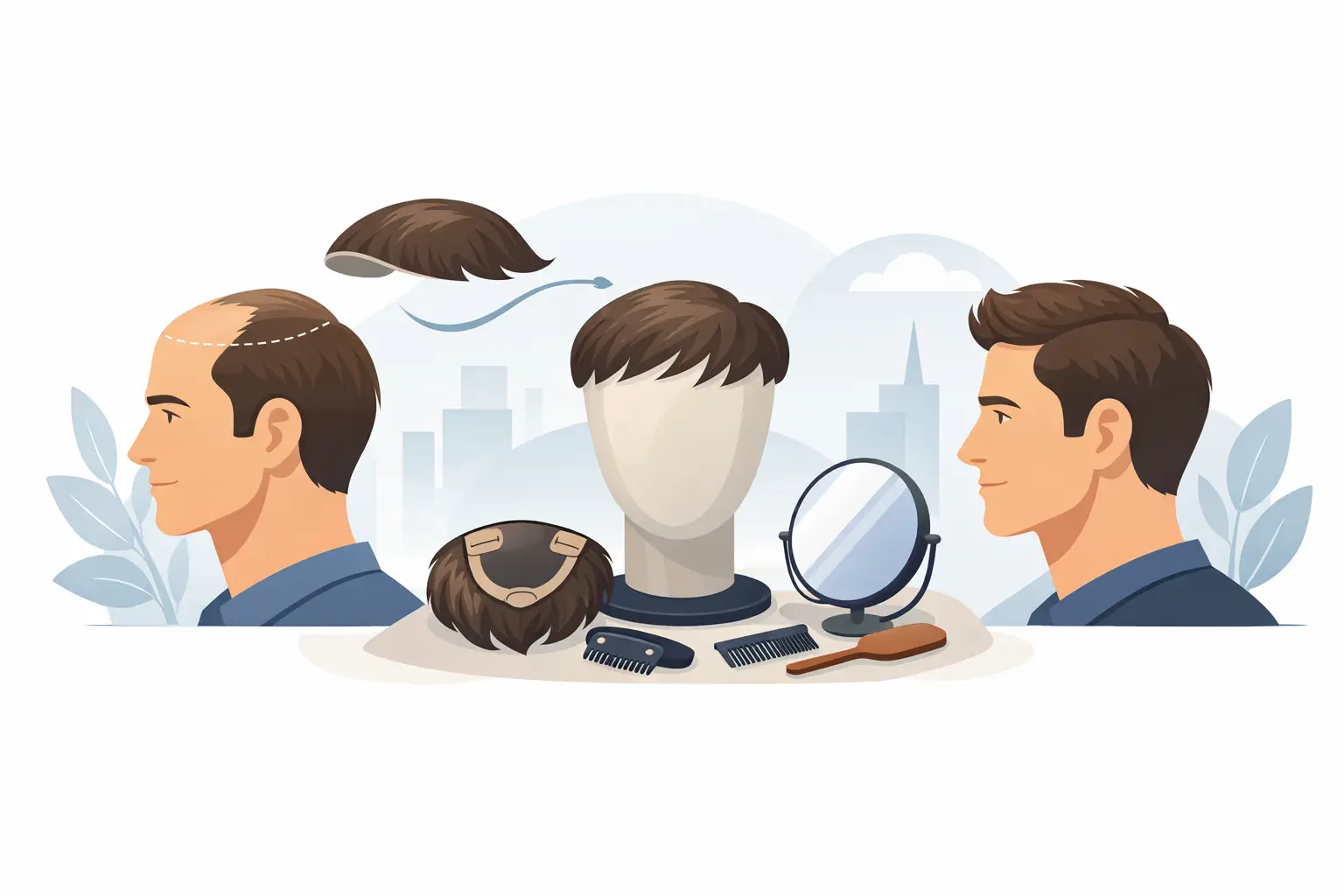
Your Guide to Men’s Hair Toppers and Fit
A thinning crown can change the way you feel under bright office lights, at the gym, or when someone is standing behind you in a photo. The right guide to men’s hair toppers starts with a simple truth: you do not have to wait for hair loss to progress before choosing a solution that gives you visible coverage and a natural-looking result.
A men’s hair topper can make a significant difference quickly, but only when it is matched to your level of hair loss, your existing hair, and the way you live. The goal is not to create a hairpiece look. It is to create a realistic, secure result that feels like it belongs to you.
Guide to Men’s Hair Toppers: Start With Coverage
A hair topper is designed to add density and coverage to a specific area, usually the top, crown, or front of the scalp. Unlike a full hair replacement system, which can cover most or all of the top of the head, a topper works best when you still have enough healthy hair around the application area to blend with it.
That distinction matters. If your main concern is a thinning crown, diffuse thinning through the top, or a widening part, a topper may be an excellent fit. If you have advanced recession, very limited hair on top, or complete baldness, a full hair replacement system will usually deliver the more natural and dependable result.
There is no benefit in choosing less coverage than you need just because it sounds easier. A properly fitted full system can still look undetectable, feel comfortable, and hold up through work, travel, exercise, and social events. The right choice comes down to your current hair pattern, not a one-size-fits-all rule.
Know the area you need to cover
Before selecting a topper, look closely at where your thinning begins and ends. A small crown area needs a different base size than broad diffuse thinning that runs from the hairline toward the back of the head. The base should cover the thinning area while extending slightly into stronger hair for a stable, believable blend.
Going too small can leave thin areas visible or make the piece hard to secure. Going too large can add unnecessary density and make blending more difficult. Accurate measurements are one reason personalized guidance is worth having, especially if this is your first hair solution.
Consider your remaining hair density
A topper relies on the hair around it to help create a unified look. Men with medium to thick side and back hair often have an easier time blending a topper. Men with finer or lighter-density hair can still wear one successfully, but the density, color, and hairstyle need more careful customization.
If your existing hair is becoming thin everywhere, do not assume a thicker topper is the answer. Excess density can look disconnected from your natural hair. A better result often comes from matching your current density and choosing a style that adds movement rather than building a heavy wall of hair.
Choose a Base That Fits Your Lifestyle
The base is the material that sits against your scalp. It affects how natural the topper looks, how it feels, how it attaches, and how much maintenance it requires. There is no single best base for every man. The best choice depends on whether you prioritize maximum realism, easy cleanup, durability, or an active-wear routine.
Lace bases are lightweight and breathable. They are especially strong at creating a natural-looking hairline and can be a good choice for men who want a softer, less noticeable finish. Because lace is delicate, it requires careful handling during cleaning and removal.
Polyurethane, often called skin, provides a smooth surface for tape or adhesive. It can be easier to clean and offers a very secure attachment when properly applied. The trade-off is that it may feel warmer than lace, particularly in hot weather or during demanding workouts.
Hybrid bases combine materials to balance realism, breathability, and durability. For many men, this is the practical middle ground. A hybrid can place lace where natural appearance matters most and a stronger material where secure bonding and easier maintenance are useful.
Your daily routine should influence the decision. If you train hard, swim, sweat heavily, or travel often, a secure attachment method and durable base deserve extra attention. If you prefer the flexibility of taking your topper off at night, clips may be appropriate, provided you have enough healthy hair for them to grip safely.
Hair Quality, Color, and Density Create Realism
The hair itself is what people notice first. Premium human hair, including Remy Indian hair, gives a more natural look and movement than lower-grade alternatives. It can be styled, cut, and worn with the texture and direction that suits you. Blended options using synthetic fibers or human gray hair can also help achieve age-appropriate color, durability, and a realistic finish.
Color matching should never be treated as choosing one shade from a chart. Natural hair has variation. It may be darker at the nape, lighter through the ends, or mixed with gray around the temples. A topper that is technically close in color but too flat or uniform can still stand out.
The same is true of density. Most men do not need extremely dense hair to look younger or more confident. In fact, a moderate density that matches your age, facial features, and remaining hair often looks more believable. The best result is one that makes people think you look well rested, sharper, or somehow different without immediately identifying why.
Match the style to your hair loss pattern
A textured crop, short quiff, side-swept style, or longer layered look can all work with a topper, but the cut has to support the blend. Styles with texture are often forgiving because they break up the transition between the topper and your natural hair. A highly exposed, slicked-back style demands a more precise hairline and attachment.
Bring honesty to the styling conversation. If you have worn your hair short for years, a sudden dense, long hairstyle may draw more attention than a gradual, believable change. You can still make a dramatic improvement without choosing a look that feels out of character.
Attachment: Security Without Sacrificing Comfort
Men’s hair toppers may be attached with clips, tape, adhesive, or a combination of methods. Clips offer convenience and are popular for temporary daily wear. They are not ideal if your surrounding hair is fragile, because repeated tension can contribute to breakage.
Tape provides a reliable hold and is generally easier to remove than liquid adhesive. Adhesive can offer stronger, longer-lasting wear, which is useful for active men or anyone who wants to shower, sleep, and work out without removing the piece. Proper scalp preparation and routine maintenance are essential for both methods.
Comfort is not something you should have to tolerate. A topper that itches, shifts, feels too tight, or creates pressure points needs attention. Sometimes the issue is the base size or attachment placement, not the concept of wearing hair. A personalized fitting can correct problems that generic online sizing cannot.
Care That Protects Your Investment
A quality topper needs consistent care, but it does not need to take over your schedule. Wash it with products intended for hair systems, use conditioner to protect softness, and avoid rough towel drying. Heat styling is possible with human hair, but frequent high heat can shorten the life of the hair just as it can with natural hair.
When removing an attached topper, use the appropriate release product and take your time. Pulling at the base can damage the material, loosen hair, and irritate your scalp. Clean away adhesive residue fully before reapplying tape or bonding products.
It also helps to set realistic expectations about lifespan. Longer wear, high heat, frequent swimming, sun exposure, and heavy sweat can all create more maintenance. That does not mean an active lifestyle is off limits. It means your system and care routine should be selected to support it.
When a Consultation Makes the Difference
A topper is not simply a product you put in a cart. The most natural outcomes come from assessing your coverage area, scalp condition, existing hair, preferred style, and day-to-day routine together. That is how you avoid common first-time mistakes such as an incorrect base size, a color that looks too solid, or density that does not match your age and hair pattern.
At 101 Hair Replacement Systems, the focus is on creating a customized result that looks natural in real life, not just in a product photo. Whether a topper is right for your stage of hair loss or a full system makes more sense, the goal remains the same: secure wear, believable hair, and the confidence to stop thinking about what is missing.
The right hair solution should let you walk into the next meeting, workout, date, or family photo without adjusting your angle or checking the mirror. Start with an honest assessment of your coverage needs, then choose the option that gives you the freedom to show up fully.