
Sub-Total: $0.00
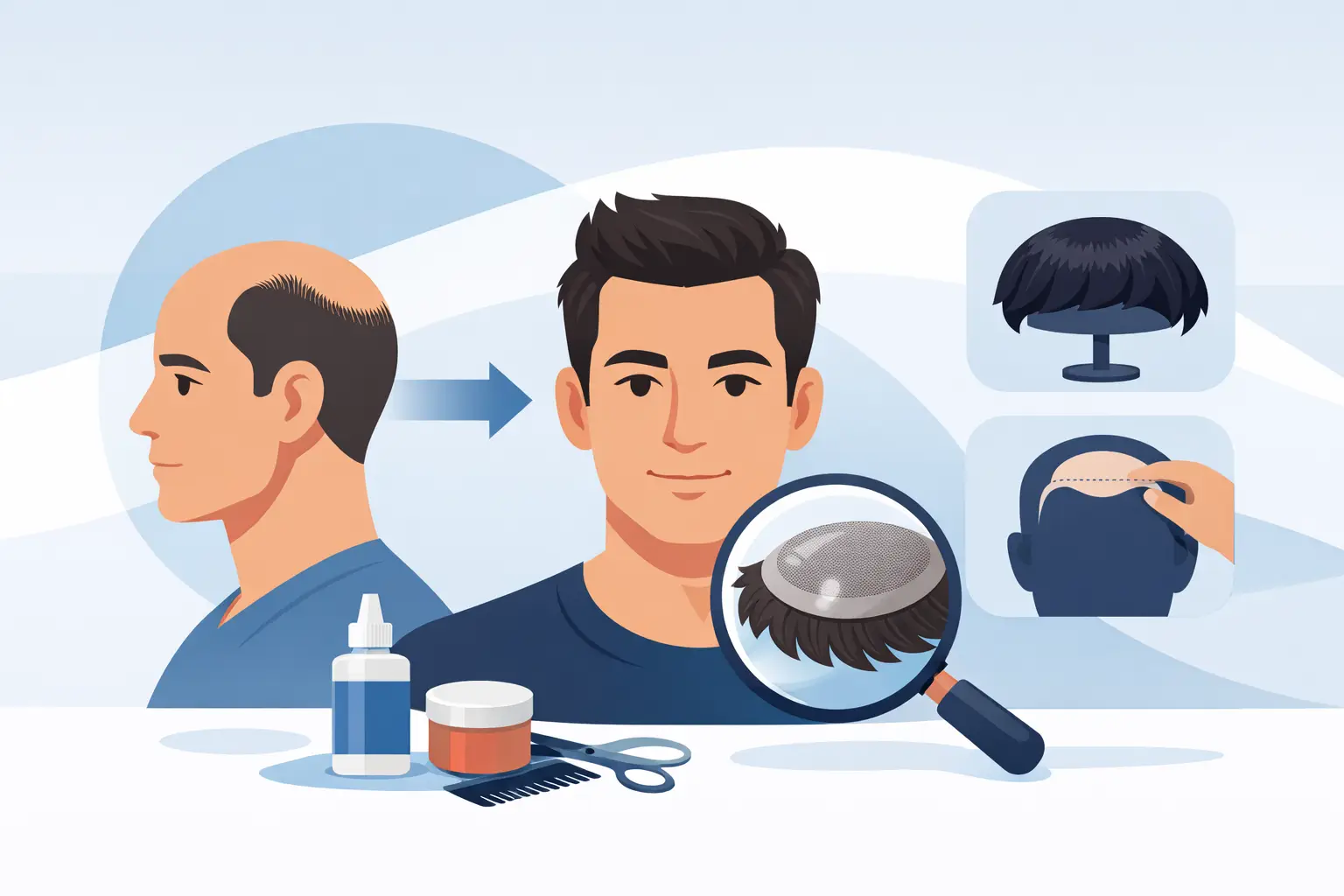
How to Choose Men’s Hairline Replacement
A hair system can have excellent hair quality, a secure bond, and the right color, yet still look wrong if the front hairline does not suit you. When you choose men’s hairline replacement, the goal is not to create a hairline from your teenage years. It is to create one that looks like it has always belonged to you – natural in conversation, comfortable in daily life, and confidence-building from every angle.
A personalized hairline replacement gives you immediate visible improvement without surgery or a long recovery period. The right choice can make a major difference in how you feel at work, on dates, in photos, during workouts, and anywhere you want to stop thinking about your hair.
Start With the Look You Want Others to See
The most convincing hairline is rarely the lowest or sharpest one. A natural result should reflect your age, facial features, hair loss pattern, and the density of your existing hair. For many men, a slightly mature hairline looks more believable than a perfectly straight, low front edge.
Think about the version of yourself you want to present. Do you want a conservative professional style with a subtle recession at the temples? Do you prefer a fuller, more youthful appearance? Are you replacing hair only in the front, or do you need a full system for more advanced hair loss? These choices shape the right base, density, and hairline design.
Your lifestyle matters just as much. A man who wears his hair forward with a textured fringe has different hairline needs than someone who wants a slicked-back style. If the hairline will be exposed, the material and front contour need extra attention. If you normally wear your hair down, you may have more flexibility, though a realistic edge is still essential.
Choose a Men’s Hairline Replacement That Fits Your Face
Hairline contours are not one-size-fits-all. The contour is the shape of the front edge of the system, and it directly affects whether your new hair looks natural against your forehead.
A more rounded contour can soften a longer or narrower face. A subtle widow’s peak can add character and reduce the overly uniform appearance that makes some hair systems look obvious. A gentle recession at the temples often works well for men who want a mature, believable result. In contrast, a very straight hairline can look strong and clean, but it requires careful placement and usually suits a younger look or a specific style.
The best choice depends on your natural facial proportions and your personal comfort level. If you have been bald or thinning for years, an aggressively low hairline may feel unfamiliar even if it looks good in the mirror. A gradual, age-appropriate restoration often delivers the biggest confidence change because it looks convincing to you as well as everyone else.
A consultation can remove the guesswork. At 101 Hair Replacement Systems, the focus is on matching the system to the man wearing it, not forcing every client into the same stock hairline or hairstyle.
Density Can Make or Break Realism
More hair is not always better. Excessive density is one of the fastest ways to make a replacement system look unnatural, especially when it does not match the hair at your sides and back.
A moderate density generally creates the most realistic result for adult men. It allows the scalp area to look believable while still delivering noticeable coverage and volume. If you have naturally thick remaining hair, you may be able to wear a fuller system. If your side hair is finer, thinner, or turning gray, a lighter density may blend better.
Density should also match the style you plan to wear. A short, cropped cut reveals more of the system and demands a more natural density transition. Longer styles can carry more volume, but they still need movement and a realistic flow. Premium Remy Indian hair helps create that natural movement because it looks and behaves more like healthy growing hair than stiff, overly processed alternatives.
Do not overlook the front transition. A good hairline should not look like a solid wall of hair. Slight variation in density and a soft, irregular edge help mimic the way natural hair grows. That detail matters when someone is standing close, when you are under bright lights, or when the wind moves your hair.
Select the Right Base for Your Routine
The base is the foundation that holds the hair and attaches to your scalp. It influences comfort, durability, breathability, and how invisible the hairline can appear. There is no single best base for every man because the right option depends on your priorities.
Thin skin bases can create an exceptionally natural-looking front because they sit close to the scalp. They are often a strong choice for exposed hairlines and men who want a clean, scalp-like appearance. The trade-off is that ultra-thin materials may require more careful handling and can have a shorter lifespan than more durable designs.
Lace bases are valued for breathability and a soft, natural front edge. They can be an excellent option for active men, especially those who exercise regularly or live in warm climates. They also work well when you want to style hair up and away from the face. Maintenance can be more detailed, however, because lace requires gentle cleaning and careful adhesive removal.
Hybrid systems combine materials to balance realism and durability. For example, a system may use lace at the front for a natural hairline and a stronger material through the rest of the base for easier attachment and longer wear. For many men, this is the practical middle ground between an invisible front and a dependable everyday system.
Match Color, Gray, and Texture Honestly
An exact color match is more complex than choosing brown, black, or blond. Natural hair contains variation. It can be warmer near the ends, cooler at the roots, or slightly different around the temples. A system that is too dark, too flat in color, or too uniform can draw attention for the wrong reason.
Texture matters too. Straight hair, loose waves, curls, and coarser patterns each reflect light differently and move differently. Your system should blend into the hair you still have, especially around the sides and back. If you shave your head fully, texture still matters because it determines the final style and how natural the hair looks in motion.
For men with gray hair, blending human gray hair or carefully selected synthetic fibers can create a more age-appropriate finish. This is not a compromise. It is often the difference between a system that looks newly purchased and one that looks like your own hair. A few well-placed gray strands at the temples or throughout the top can make the result far more believable.
Consider How You Will Wear and Maintain It
A great system should fit your life, not turn into another daily concern. Before choosing, be honest about how much maintenance you are comfortable doing. Some men prefer longer wear with a strong adhesive and a regular professional or at-home maintenance schedule. Others want a simpler routine that allows more frequent removal and cleaning.
If you swim, sweat heavily, travel often, wear hats, or train at the gym, tell your specialist before selecting a system. Secure attachment methods can support an active lifestyle, but your base and adhesive should be chosen with that routine in mind. A system that works beautifully for a low-maintenance office schedule may not be the best fit for someone who runs outdoors every day.
Your haircut also affects upkeep. Shorter styles usually need more frequent trimming to keep the blend clean. Longer styles may give you more styling options but can require extra conditioning and gentle detangling. The right choice is the one you can maintain consistently, because consistency protects both the appearance and lifespan of your hair system.
Avoid the Common Hairline Mistakes
The biggest mistake is choosing based on a photo alone. A hairstyle that looks impressive on another man may not suit your face shape, age, natural side hair, or comfort preferences. Another common mistake is ordering a hairline that is too low and dense in pursuit of maximum coverage.
Trying to save money on generic materials can also cost more over time if the system looks unnatural, sheds early, or feels uncomfortable. A quality men’s hair replacement system should be selected around fit, realism, and lifestyle durability – not just an initial price point.
Finally, do not assume you have to figure it out alone. The front hairline is the detail people notice first, and it deserves personalized guidance. A professional assessment can help you choose a contour, density, color blend, base material, and attachment approach that all work together.
The right hairline replacement does more than cover hair loss. It gives you the freedom to look in the mirror, recognize yourself, and get on with the moments that deserve your attention. Start with a natural design that feels right for your life, then let confidence do the rest.